Wall Soundproofing Solutions

So you want to soundproof a wall?

When researching information on wall soundproofing you are likely confronted by a confusing array of acoustic materials and soundproof panels, along with wildly varying performance statistics. At Soundstop we simplify the process.

Comprehensive Wall Soundproofing Solutions

Wall soundproofing can make a major difference to the comfort, privacy and usability of a room. Whether you are dealing with noisy neighbours, sound travelling between rooms, music, TV noise, voices or general disturbance, choosing the right wall soundproofing system is important.

There are many different acoustic products available, including acoustic insulation, soundproof plasterboard, resilient bars, acoustic membranes, sound absorbing panels and sound isolation clips. The best solution will depend on your wall type, the noise problem, the space available and the level of performance you need.

Why choose wall soundproofing?

Wall soundproofing is designed to reduce sound transfer through internal walls, party walls, stud walls and solid walls. A well-designed wall system can help absorb, block and dampen sound vibrations before they travel through the structure of the building.

This makes wall soundproofing a practical choice for homes, flats, offices, studios, treatment rooms, meeting rooms and other spaces where noise control matters.

The benefits of wall soundproofing

  • Improved privacy: Reduces sound transfer between rooms and adjoining properties.
  • Reduced noise disturbance: Helps limit unwanted noise from neighbours, TVs, voices, music and general activity.
  • Better sleep and comfort: A quieter space can make bedrooms and living areas more relaxing.
  • More usable rooms: Soundproofing can make home offices, studios, cinemas and workspaces more practical.
  • Improved acoustic control: The right materials can reduce vibration, resonance and sound transfer through the wall structure.
  • Added property appeal: A quieter and more private property can be more attractive to future buyers or tenants.

Key questions before choosing a wall soundproofing solution

Before choosing a wall soundproofing system, it is important to understand the wall, the type of noise and the level of reduction you are trying to achieve. These questions will help guide you towards the correct solution.

What is the wall made from?

The existing wall construction makes a big difference. A solid brick or block wall will behave differently to a lightweight timber stud wall. Solid walls usually have more mass, while stud walls often have cavities that can allow sound to resonate and travel more easily.

How loud is the noise?

The level of noise will affect the type of system needed. Quiet, muffled sound may only need a slimmer solution, while clear speech, loud TV, music, barking dogs or shouting will usually require a higher-performance wall build-up.

What type of noise are you trying to reduce?

Airborne noise includes voices, music, TV and traffic noise. Impact or vibration noise can come from doors closing, footsteps, movement, structural vibration or appliances. Some situations involve a mix of both, which may require a more complete acoustic wall system.

Is there a chimney breast or alcove?

Chimney breasts and alcoves can affect how sound travels through a party wall. Alcoves are often weaker points because they can be thinner or have less mass than the chimney breast itself. In many cases, the alcoves need the most attention.

How to soundproof a brick wall

Brick and block walls are common in UK homes, especially between attached or semi-detached properties. Although these walls have more mass than lightweight stud walls, noise can still pass through them, especially through weak points, flanking paths, gaps and alcoves.

A good brick wall soundproofing system usually focuses on adding mass, reducing vibration and creating separation from the original wall.

1. Decouple the new wall lining

Decoupling means reducing direct contact between the existing wall and the new soundproofing layers. This helps limit vibration transfer and improves the overall performance of the system.

2. Add acoustic mass

Dense materials such as acoustic plasterboard, acoustic plank and soundproof membranes help block airborne noise. The more appropriate mass you add, the harder it is for sound to pass through.

3. Use different types of mass

Combining different acoustic layers can help treat a wider range of sound frequencies. This is why many systems use a build-up of plasterboard, acoustic membrane and other dense materials rather than one single product.

4. Dampen vibration and sound energy

Sound does not only travel through the air. It can also travel as vibration through the wall structure. Resilient bars, isolation clips and damping layers can help reduce this transfer.

5. Add acoustic insulation where needed

Acoustic mineral wool is often used inside cavities to reduce resonance and improve the performance of independent or stud wall systems. It helps absorb sound energy inside the void.

Are there building regulations for wall soundproofing?

Some projects may need to meet acoustic requirements under Building Regulations, especially where residential properties are being created, converted or separated. In the UK, this is commonly linked to Part E, which covers resistance to the passage of sound.

If your project needs regulatory compliance, you should confirm the requirements before work begins. In some cases, a sound test may be needed after installation to demonstrate that the completed work meets the required standard.

Will wall soundproofing help with noisy neighbours?

Yes, the right wall soundproofing system can help reduce noise from neighbours. This can include voices, TV noise, music and general airborne sound passing through a party wall.

The level of improvement depends on the existing wall construction, the type of noise, the chosen system and the quality of installation. For best results, the wall system needs to be fitted correctly, sealed properly and designed to reduce both sound transfer and vibration.

Choosing the right wall soundproofing system

The best wall soundproofing solution is not always the thickest or most expensive option. It depends on the problem you are trying to solve. Some rooms may only need a slim wall lining, while others may need an independent stud wall, resilient bars, isolation clips or a full high-performance acoustic system.

If you are unsure which system is right for your wall, speak to our team before ordering. We can help you compare the available options and choose a solution that suits your space, budget and noise issue.

Solution Types

Wall soundproofing systems usually fall into two main categories: slimmer direct-to-wall systems and higher-performance independent wall systems. The right option depends on your available space, noise issue and installation requirements.

Type 1: Slim-line

Slim-line wall solutions are designed for projects where space is limited. They are generally easier to install and are a good option when you want to improve sound reduction without building out a deep wall structure.

Type 2: Independent Wall

Independent wall systems use a separate timber or metal stud frame to create better separation from the existing wall. They take up more space and involve more installation work, but usually offer stronger acoustic performance.

Our Wall Soundproofing Solutions

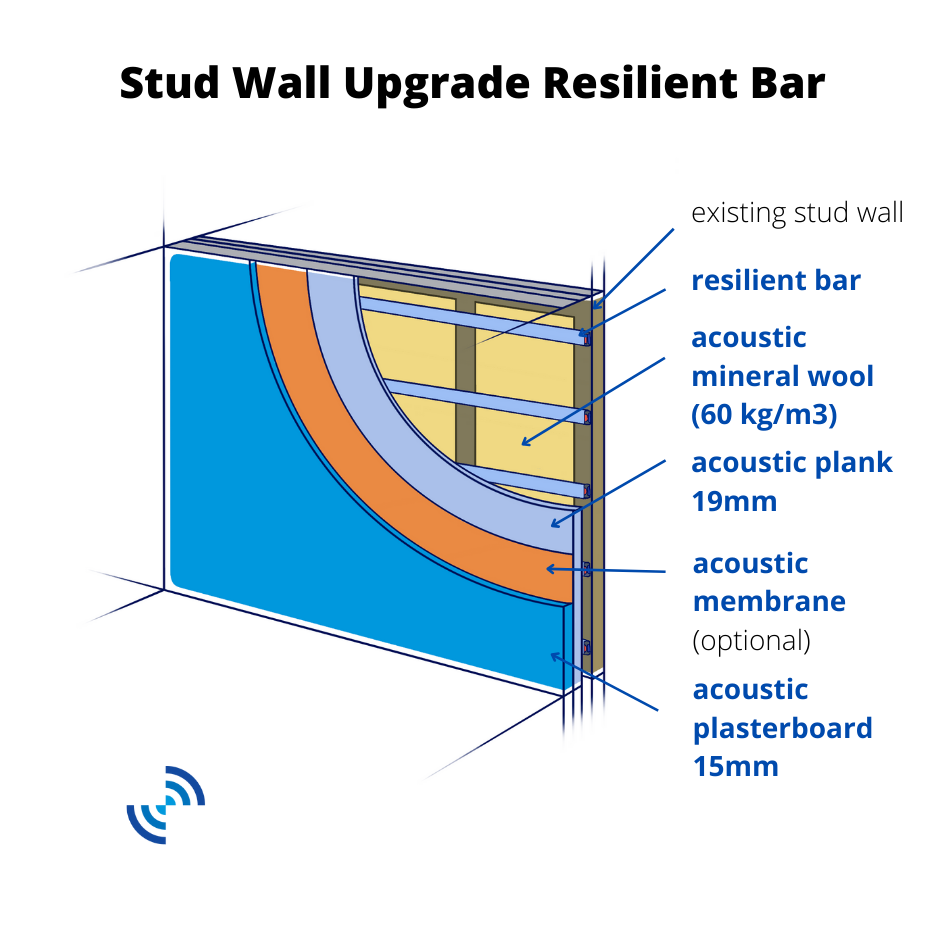
This solution is designed for upgrading an existing stud wall where you want to improve sound reduction without building a completely separate independent wall. It is useful for internal partitions, lightweight stud walls and rooms where the existing wall structure needs better acoustic performance.

It improves the wall by combining acoustic mineral wool inside the stud cavity with resilient bars and dense acoustic board layers. The mineral wool helps absorb sound inside the void, while the resilient bars reduce direct vibration transfer through the wall frame.

The system uses acoustic mineral wool, resilient bars, 19mm acoustic plank and 15mm acoustic plasterboard. An acoustic membrane can also be added as an optional upgrade to increase mass and improve sound reduction.

This system can be installed by a competent DIYer or tradesperson, but it does require accurate measuring, cutting, fixing and sealing. Correct installation is important because gaps, poor fixings or direct contact points can reduce the acoustic performance.

Yes. The main upgrade is the addition of an acoustic membrane. This adds extra mass into the wall build-up, helping the system deal with more airborne noise such as voices, TV noise and general neighbour noise.

It is more space-saving than building a completely independent stud wall, but it will still add depth because of the resilient bars and board layers. It is a good middle-ground option when you want to improve a stud wall without using a much deeper system.

View solution & calculate costs

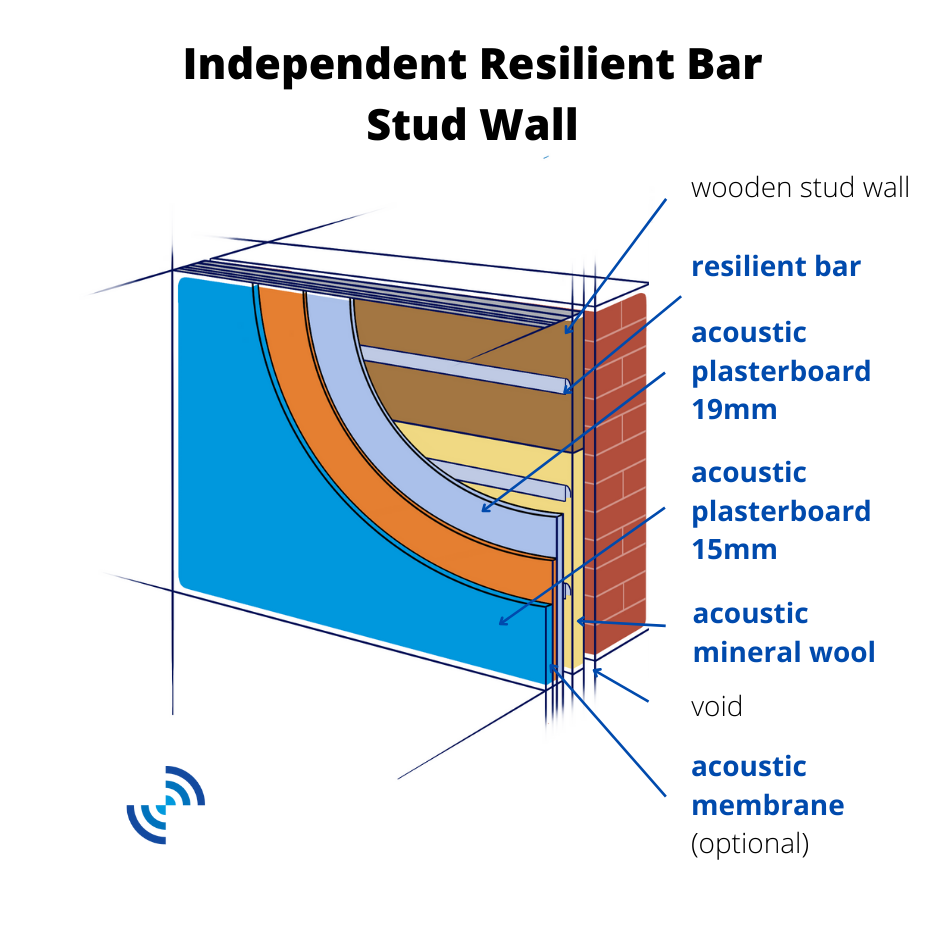
This system is suited to walls where stronger sound reduction is needed, especially party walls and solid walls affected by neighbour noise. It creates a new independent stud structure, helping reduce direct sound and vibration transfer from the original wall.

The new stud frame is built away from the existing wall, creating separation and reducing the amount of vibration that can pass through. Acoustic mineral wool is then added inside the void, with resilient bars and acoustic board layers fitted to the new frame.

The build-up typically includes a timber stud frame, acoustic mineral wool, resilient bars, 19mm acoustic plasterboard and 15mm acoustic plasterboard. An acoustic membrane can also be added as an optional performance upgrade.

Yes. Because this system uses a separate stud wall, it takes up more room than a slim direct-to-wall system. However, the extra depth helps improve acoustic separation and makes it a stronger option for more demanding noise problems.

In many cases, yes. An independent wall gives better separation from the original structure, which can improve soundproofing performance. It is usually chosen when the noise issue is more noticeable or when a higher-performance wall solution is needed.

It can be a strong option for more noticeable airborne noise such as voices, TV and music. For the most severe noise issues, you may also want to compare this with a resilient clip system, which provides a more advanced form of isolation.

View solution & calculate costs

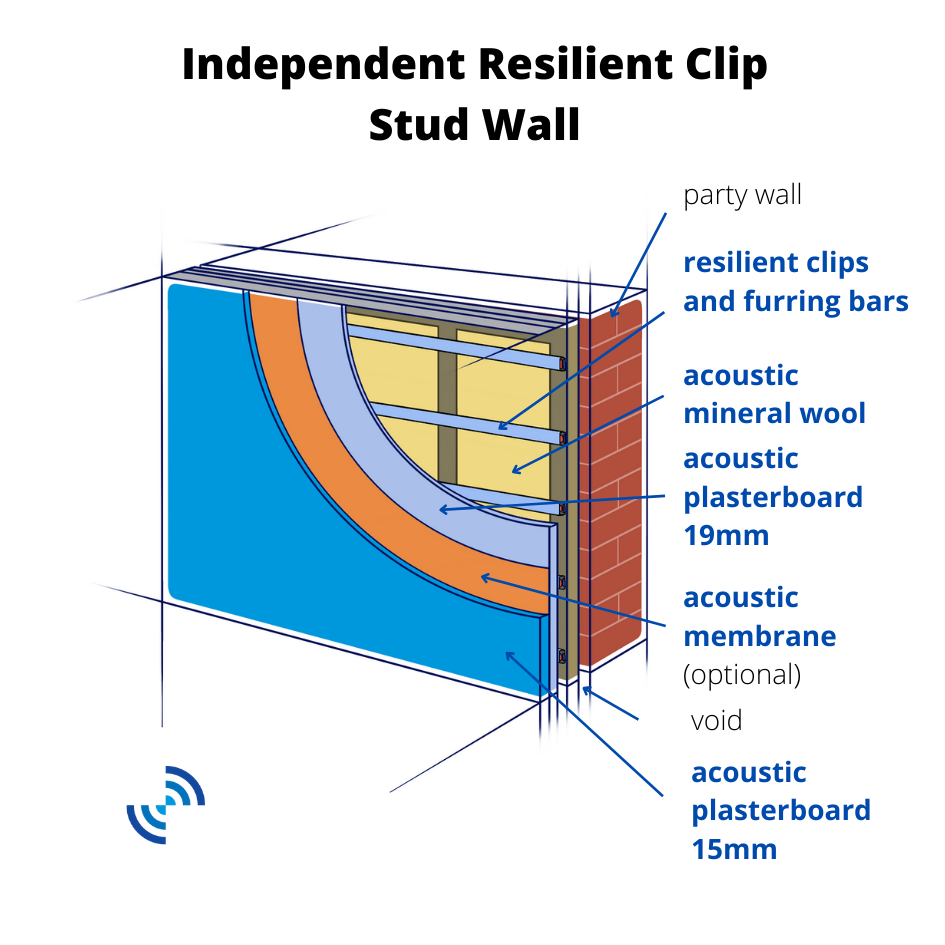
This is a higher-performance wall soundproofing system for more demanding noise problems. It is often used where a standard wall upgrade is not enough and better isolation from the original party wall or structure is required.

Resilient clips and furring bars help isolate the plasterboard layers from the structure behind them. This reduces direct vibration transfer and allows the wall lining to perform more effectively against airborne sound and structural vibration.

The system uses an independent stud structure, resilient clips, furring bars, acoustic mineral wool, acoustic plasterboard layers and an optional acoustic membrane. These layers work together to increase mass, absorb sound and reduce vibration transfer.

It is one of the stronger wall soundproofing options because it combines separation, absorption, acoustic mass and resilient isolation. It is normally better suited to serious noise issues than a basic direct-to-wall or simple stud upgrade system.

Because this is a more technical system, professional installation is often recommended. The clips, bars, boards, insulation and sealants all need to be fitted correctly to avoid acoustic weak points and maintain the performance of the system.

Choose this system when you need a more robust isolation method and are dealing with more disruptive noise. Resilient bars are useful, but resilient clips and furring bars can offer better controlled separation when installed correctly.

View solution & calculate costs

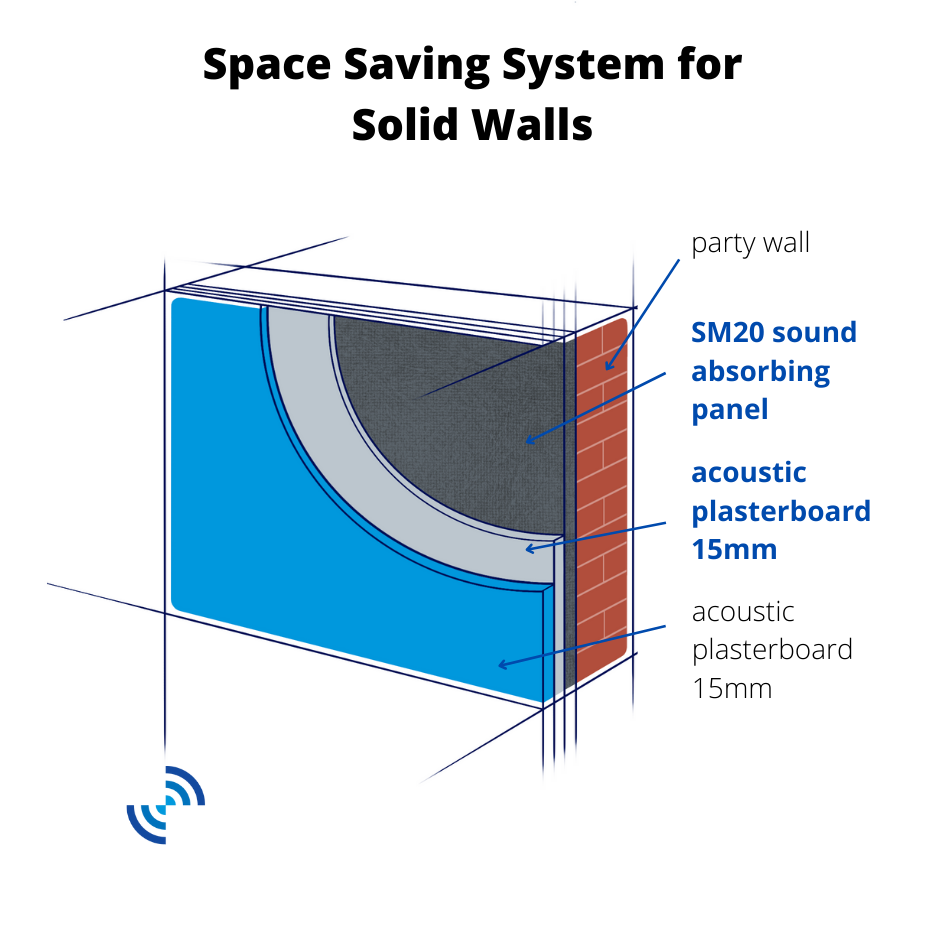
This solution is designed for solid party walls where space is limited. It is a good option when you want to improve sound reduction without building an independent stud wall or losing too much room depth.

The system uses SM20 sound absorbing panels with acoustic plasterboard layers to add acoustic treatment to the existing wall. It helps improve the wall build-up while keeping the overall depth slimmer than many stud-based systems.

Yes. This is one of the more space-saving wall soundproofing options. It is designed for situations where you need to improve a party wall but do not want the depth of an independent stud wall or clip-based system.

No. The SM20 system is intended as a slimmer direct-to-wall style solution, so it does not require a new independent stud frame. This makes it simpler and less space-hungry than deeper wall systems.

It can help reduce everyday airborne noise through a party wall, such as voices, TV and general background noise. If the noise is very loud or severe, an independent stud wall or resilient clip system may be more suitable.

Yes, it is one of the more straightforward wall soundproofing systems for competent DIY installation. As with any acoustic system, the boards still need to be fitted carefully, sealed correctly and installed without gaps for the best result.

View solution & calculate costs

Need help with your soundproofing?

Our team are on hand to answer any questions and give you all the advice you need.

Contact us

How do our wall soundproofing solutions work?

Our wall soundproofing solutions work by combining different acoustic materials to reduce the amount of sound passing through a wall. Instead of relying on one single product, each system uses a carefully selected build-up of mass, absorption, damping and isolation to help control noise transfer.

Depending on the solution, this can include acoustic plasterboard, acoustic mineral wool, soundproofing membranes, resilient bars, isolation clips, furring bars and specialist acoustic panels. These materials work together to block airborne noise, reduce vibration and improve the acoustic performance of the wall.

Some systems are designed to be slim and space-saving, making them suitable for rooms where you cannot afford to lose much floor space. Other systems use independent stud frames or clip-based isolation methods to provide a higher level of sound reduction for more serious noise issues.

Our wall soundproofing solutions can be used for a range of residential and commercial projects, including bedrooms, home offices, studios, meeting rooms, treatment rooms, flats, terraced houses and semi-detached homes.

To make ordering easier, many of our wall soundproofing systems include a solution calculator. You can enter your wall dimensions, choose your preferred options and build a kit around your requirements, helping you order the correct materials for your project.

What are the benefits of wall soundproofing?

Wall soundproofing offers several benefits for homes, workplaces and specialist acoustic spaces. The main benefit is simple: it helps reduce unwanted noise passing through walls, creating a quieter and more comfortable environment.

For homes, this can help reduce disturbance from neighbours, voices, televisions, music and general day-to-day noise. For commercial spaces, it can improve privacy, reduce distractions and make rooms more suitable for meetings, calls, consultations or focused work.

  • Improved privacy: Helps reduce sound transfer between rooms or adjoining properties.
  • Less noise disturbance: Can reduce unwanted airborne noise such as talking, TV, music and general activity.
  • Better comfort: A quieter room can feel calmer and more relaxing, especially in bedrooms and living spaces.
  • More practical rooms: Soundproofing can make home offices, studios, cinemas and commercial rooms easier to use.
  • Reduced distractions: Lower background noise can make it easier to focus, work, rest or communicate.
  • Flexible system options: Different wall solutions are available depending on space, budget and performance needs.

The best results usually come from choosing a system that matches the wall type, the type of noise and the level of sound reduction required.

What should you consider when choosing a wall soundproofing solution?

When choosing a wall soundproofing solution, the first thing to consider is the type of wall you are treating. A solid brick or block wall will need a different approach to a lightweight stud wall, as each wall type allows sound to travel in a different way.

You should also think about the type and level of noise you are trying to reduce. Light background noise may only need a slimmer solution, while clear speech, loud music, barking dogs or impact vibration may need a higher-performance wall system.

Space is another important factor. Slim-line wall soundproofing solutions are useful where room depth is limited, but higher-performance systems usually require a deeper build-up. Independent stud walls and resilient clip systems can offer stronger acoustic separation, but they will take up more space than direct-to-wall systems.

Installation should also be considered. Some wall soundproofing systems are more suitable for competent DIY installation, while others are better installed by an experienced tradesperson. Correct fitting, sealing and fixing are essential because small gaps or weak points can reduce the overall performance of the system.

Finally, think about your budget and the finish you want to achieve. Most systems are finished with plasterboard and can be skimmed, painted or decorated once installed, allowing the room to look normal after the soundproofing work is complete.

How do you create a noise-reducing wall?

Creating a noise-reducing wall usually involves combining several acoustic methods together. A single product on its own rarely solves every noise issue, especially when the sound is loud, persistent or travelling through the structure of the building.

The steps below explain the main principles used in effective wall soundproofing.

1. Identify where the noise is coming from

Before choosing a system, it is important to understand the source of the noise. Noise may be coming through a party wall, internal wall, alcove, chimney breast, ceiling, floor, window, door or another flanking path. Treating the wrong area can lead to poor results.

2. Add acoustic mass

Dense materials help block airborne sound. Acoustic plasterboard, acoustic planks and soundproofing membranes are commonly used to add mass to a wall system. This makes it harder for sound waves to pass through the structure.

3. Use acoustic insulation

Acoustic mineral wool is often used inside stud frames or wall cavities. It helps absorb sound energy within the void and reduces resonance, making the overall system more effective.

4. Reduce vibration transfer

Sound can travel as vibration through walls, studs and fixings. Resilient bars, isolation clips and independent stud frames help reduce direct contact with the existing wall, limiting the path that vibration can travel through.

5. Seal gaps and weak points

Even small gaps can allow sound to leak through. Acoustic sealant should be used around edges, joints, sockets and other weak points where appropriate. A soundproofing system needs to be installed as a complete sealed layer to perform properly.

6. Choose the right system for the room

A bedroom affected by neighbour noise may need a different system to a music room, cinema room, office or studio. The best wall soundproofing solution depends on the noise issue, the wall construction, the room layout and how much space you can afford to lose.

If you are unsure which option is right for your project, our team can help you compare the available wall soundproofing solutions and choose a system that suits your space, budget and performance requirements.

Not found the solution you need yet?

Get 10% Off Your First Order

Sign up today and we’ll send your discount code straight to your inbox.