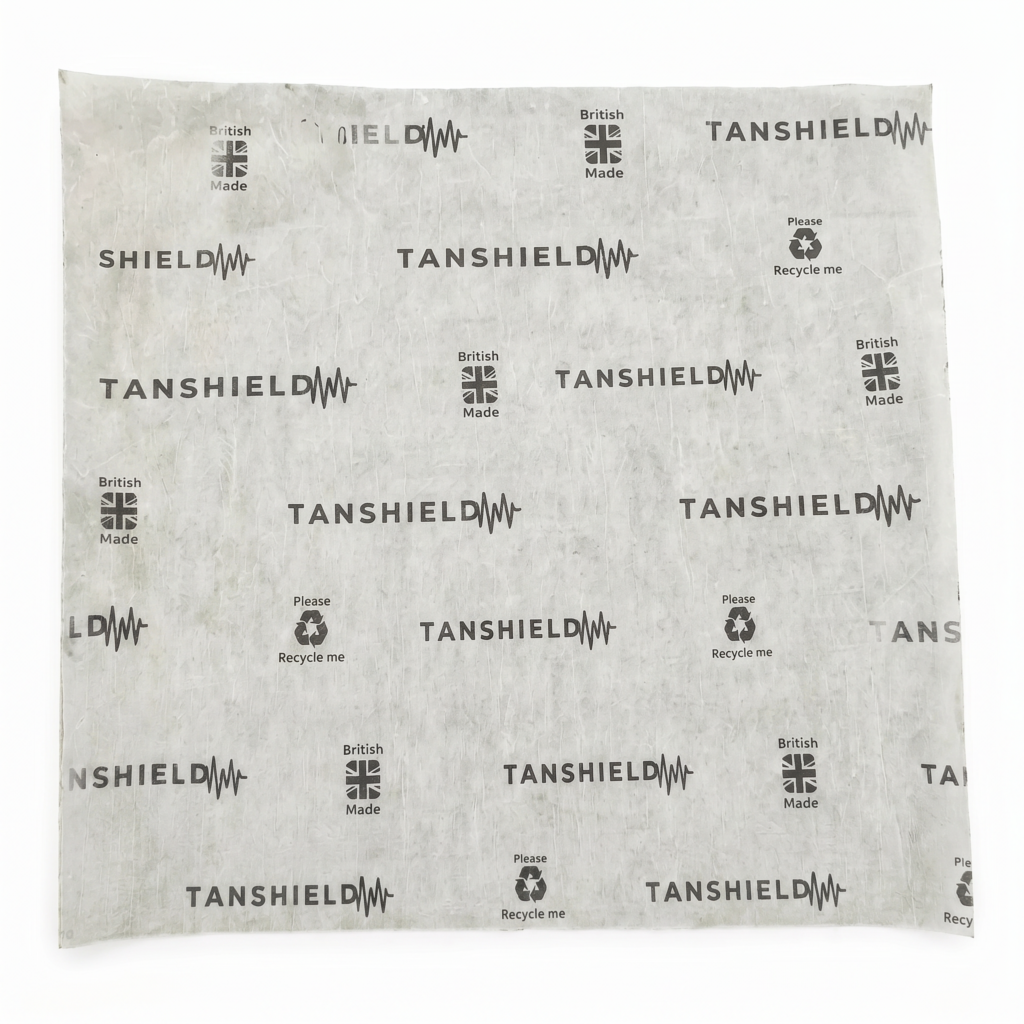
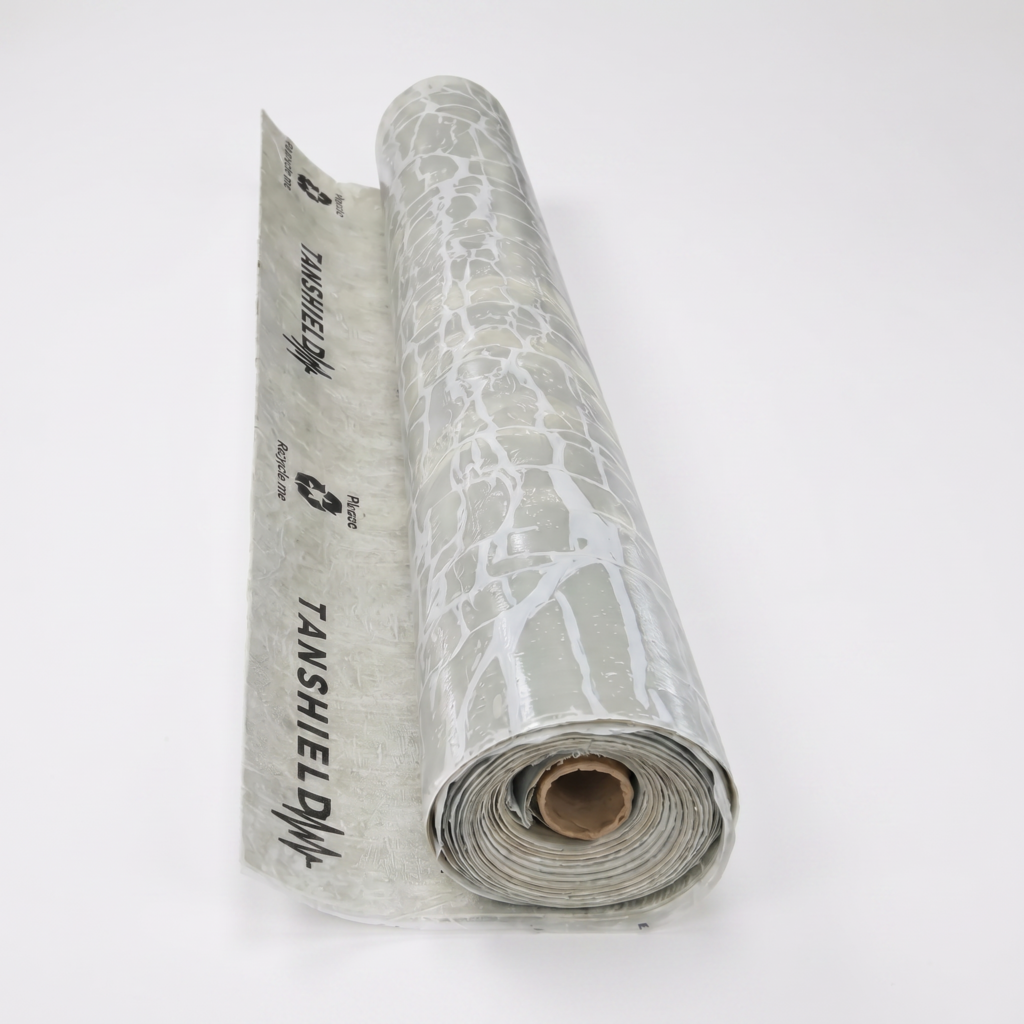
TANShield 100SA Self-Adhesive Acoustic Membrane
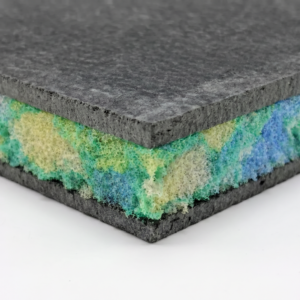
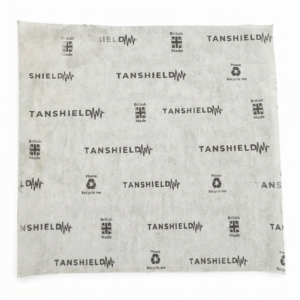
TANShield 100SA Self-Adhesive Acoustic Membrane is a high-density flexible acoustic membrane designed to add mass and improve sound insulation across walls, floors, ceilings, panels, ducting, pipework and other suitable structures. Supplied in a 1.2m x 4m roll, each roll covers 4.8m² and provides a dense 5mm acoustic layer with a mass of 10kg/m².
TANShield 100SA is manufactured from a specialist formulation of EPR and thermoplastic polymers, filled with naturally occurring minerals. It is designed to enhance the sound insulation and damping performance of existing substrates, including plasterboard, metal, wood, plastic and similar materials.
What is TANShield 100SA used for?
TANShield 100SA is used to add high levels of acoustic mass to walls, floors, ceilings, boards, panels and service structures. The self-adhesive backing makes it easier to apply directly to suitable prepared surfaces where a dense acoustic barrier layer is required.
It is commonly used in wall soundproofing systems, ceiling soundproofing systems, floor build-ups, acoustic board upgrades, ductwork, pipework, machinery enclosures, service areas, studios, media rooms, commercial spaces and refurbishment projects.
How does TANShield 100SA acoustic membrane work?
TANShield 100SA works by adding a dense, flexible mass layer to the structure. The added mass helps resist airborne sound transmission, while the flexible composition helps damp vibration and resonance within the overall build-up.
Its soft and flexible construction allows it to conform to irregular surfaces more easily than rigid board products. This makes it especially useful for acoustic applications involving ducting, pipework, curved surfaces, panels, machinery casings and other awkward details.
TANShield 100SA is usually not used as a standalone soundproofing product. It performs best when combined with suitable boards, panels, acoustic insulation, resilient systems and acoustic sealant.
What type of noise does TANShield 100SA help reduce?
TANShield 100SA is mainly used to help reduce airborne noise and improve acoustic damping. This includes voices, TV noise, music, office noise, plant noise, duct noise, pipe noise and general room-to-room sound transfer.
When used in floor and ceiling systems, it can also support the wider acoustic build-up by adding mass and reducing vibration. Impact noise from footsteps normally requires additional resilient layers, acoustic underlays, floating floor systems or ceiling isolation products.
Where can TANShield 100SA be used?
TANShield 100SA Self-Adhesive Acoustic Membrane is suitable for a range of domestic, commercial, industrial and trade soundproofing applications, including:
- Party wall soundproofing
- Stud wall upgrades
- Acoustic plasterboard systems
- Ceiling soundproofing systems
- Floor soundproofing build-ups
- Timber sheet material upgrades
- Metal panel damping
- Ductwork and pipework noise control
- Plant rooms and service areas
- Machinery casings and enclosures
- Home offices, studios and media rooms
- Commercial offices, meeting rooms and shared spaces
Why choose TANShield 100SA?
TANShield 100SA is useful where a heavy, flexible acoustic mass layer is required but available space is limited. At 10kg/m² and 5mm thick, it adds substantial acoustic mass without creating a deep wall, floor or ceiling build-up.
The self-adhesive backing makes it practical for bonding to boards, panels and prepared surfaces. Its flexible composition also makes it useful for irregular shapes, curved surfaces and service applications where rigid acoustic boards would be difficult to install.
TANShield 100SA vs standard MLV100 SA — what is the difference?
TANShield 100SA and MLV100 SA are both high-mass self-adhesive acoustic membranes, but TANShield is designed as a soft, highly flexible barrier mat with strong conformability to irregular surfaces.
This makes TANShield 100SA especially useful where the membrane needs to follow uneven surfaces, ductwork, pipework, metal panels or similar assemblies. Standard MLV100 SA is often used more generally in flat wall, floor and ceiling build-ups.
Key benefits
- Self-adhesive acoustic membrane — easier to apply to suitable boards, panels and prepared surfaces.
- 10kg/m² mass — adds substantial acoustic mass to walls, floors, ceilings and panels.
- 5mm thickness — high-mass acoustic layer with limited space loss.
- Published acoustic performance of 34dB — supplier-listed acoustic performance for the membrane.
- Highly flexible construction — useful for irregular surfaces, pipework, ducting and curved details.
- Suitable for multiple substrates — can be used with plasterboard, metal, wood, plastic and similar materials.
- Helps reduce airborne noise — useful for voices, TV noise, music, plant noise and general sound transfer.
- 4.8m² coverage per roll — suitable for wall, floor, ceiling and service-area applications.
- Mineral-loaded formulation — dense barrier construction filled with naturally occurring minerals.
- Lead-free and bitumen-free — manufactured without lead, unrefined aromatic oils or bitumen.
Helpful advice before buying
TANShield 100SA performs best when used as part of a complete acoustic system. The final result will depend on the existing structure, supporting board layers, fixing method, installation quality and how well gaps, joints and weak points are sealed.
For wall and ceiling soundproofing, TANShield 100SA may be combined with plasterboard, acoustic boards, acoustic mineral wool, resilient bars, furring channels and acoustic sealant. For ducting, pipework and plant applications, it should be fitted in direct contact with the substrate and supported properly so the membrane remains secure.
Because TANShield 100SA is heavy, handling and fixing should be planned carefully, especially on walls, ceilings, ductwork and overhead applications. If you are unsure whether TANShield 100SA is right for your project, please contact our team before ordering.
TANShield 100SA Self-Adhesive Acoustic Membrane Technical Specifications
TANShield 100SA Self-Adhesive Acoustic Membrane is a high-density, flexible acoustic barrier mat used to add mass, improve sound insulation and damp vibration across walls, floors, ceilings, panels, ductwork, pipework and other suitable substrates.
Product Specification
| Product Name |
TANShield 100SA Self-Adhesive Acoustic Membrane |
| Product Type |
Self-adhesive acoustic membrane / acoustic barrier mat |
| Material |
EPR and thermoplastic polymer formulation filled with naturally occurring minerals |
| Application |
Walls, floors, ceilings, panels, pipework, ductwork and similar acoustic damping applications |
| Suitable For |
Plasterboard, metal, wood, plastic, sheet materials, service structures, ducting and pipework |
| Roll Size |
1.2m x 4m |
| Coverage |
4.8m² per roll |
| Thickness |
5mm |
| Mass |
10kg/m² |
| Approx. Roll Weight |
48kg per roll |
| Backing Type |
Self-adhesive backing with reinforcing scrim |
| Scrim |
Integrated polypropylene scrim / reinforcing scrim depending on product face |
| Published Acoustic Performance |
Supplier data lists acoustic performance of 34dB; final result depends on the full system and installation conditions |
| Main Noise Type |
Airborne noise and vibration damping |
| Composition Note |
Free from lead, unrefined aromatic oils and bitumen according to supplier data |
| Manufacture |
Developed and manufactured in the UK |
| Installation Method |
Bonded to suitable clean, dry and prepared surfaces using the self-adhesive backing |
| Cutting Method |
Sharp utility knife or suitable cutting tool |
| Fire Rating |
Not confirmed in reviewed supplier data — confirm before compliance-led use |
| Standalone Product? |
No — should be used as part of a complete acoustic system or suitable damping build-up |
Suitable Applications
TANShield 100SA Self-Adhesive Acoustic Membrane can be used in a range of acoustic applications, including:
- Party wall soundproofing
- Stud wall acoustic upgrades
- Solid wall lining systems
- Ceiling soundproofing systems
- Floor soundproofing systems
- Plasterboard and acoustic board upgrades
- Timber sheet material upgrades
- Metal panel damping
- Ductwork acoustic treatment
- Pipework noise control
- Plant rooms and machinery enclosures
- Studios, media rooms and commercial spaces
Acoustic Use
TANShield 100SA is used to improve acoustic performance by adding mass and damping to the soundproofing build-up. It is mainly used to reduce airborne sound transmission and vibration through lightweight or resonant substrates.
It is typically installed in direct contact with the existing panel, board or structure to maximise acoustic performance. Its flexible construction makes it especially useful where the membrane needs to follow uneven, curved or irregular surfaces.
Common System Uses
- Bonded to plasterboard before installation
- Bonded to acoustic boards as part of a wall build-up
- Used between layers of plasterboard or sheet material
- Used in ceiling systems with resilient bars or furring channels
- Used in floor systems with acoustic boards or floating floor layers
- Wrapped or bonded around suitable ductwork and pipework
- Bonded to metal, timber or plastic panels for vibration damping
- Combined with acoustic mineral wool inside wall, floor or ceiling cavities
- Combined with acoustic sealant around edges, joints and penetrations
Important Performance Note
TANShield 100SA is an acoustic membrane, not a complete soundproofing system on its own. The final performance depends on the full wall, floor, ceiling, panel or service build-up.
Existing structure, supporting board layers, substrate type, cavity treatment, fixing method, sealing detail, installation quality and flanking noise paths can all affect the final result.
Published acoustic figures should be treated as product or test-condition dependent. For compliance-led projects, use the correct tested system data and seek project-specific acoustic advice where required.
Handling Advice
TANShield 100SA rolls are heavy and should be handled carefully. Store the roll dry, protected and away from sharp objects before installation.
Before fitting, make sure the membrane and substrate are clean, dry and free from dust, grease and loose material. Cut carefully around edges, corners, sockets, services, pipework, ducting and other obstructions.
Because TANShield 100SA has a mass of 10kg/m², wall and ceiling installations should be planned carefully. Do not rely on adhesive alone where the system requires mechanical support or where the membrane is being installed overhead.
How to Install TANShield 100SA Self-Adhesive Acoustic Membrane
TANShield 100SA Self-Adhesive Acoustic Membrane is installed as a dense acoustic mass and damping layer within wall, floor, ceiling, panel, ductwork and pipework soundproofing systems. It can be bonded to suitable boards, panels or prepared surfaces using its self-adhesive backing.
For the best result, the surface should be clean, dry, stable and free from dust, grease and loose material before the membrane is fitted.
What You’ll Need
- TANShield 100SA Self-Adhesive Acoustic Membrane
- Acoustic sealant
- Acoustic jointing tape, where required
- Tape measure
- Pencil or marker
- Straight edge
- Sharp utility knife
- Roller or flat board for applying pressure
- Clean cloth or brush for dust removal
- Suitable primer, if required for dusty or porous surfaces
- Plasterboard, acoustic board or other finishing board layer, where required
- Temporary support, where required for wall or ceiling installation
- Mechanical fixings, straps or support bands, where required for ducting or pipework
- PPE gloves
- Safety glasses
- Knee pads for floor installations
- Waste bag for offcuts and release liner
Before You Start
Check the installation surface before fitting TANShield 100SA. The surface should be clean, dry, flat or suitably shaped, stable and suitable for bonding.
Remove dust, grease, loose paint, loose plaster, wallpaper residue, oil and other unstable materials. If the surface is dusty, porous or difficult to bond to, it may need to be sealed or primed before the membrane is applied.
Plan the full acoustic build-up before starting. TANShield 100SA is most effective when used with suitable supporting materials such as plasterboard, acoustic boards, acoustic mineral wool, resilient bars, furring channels, acoustic sealant or mechanical support where required.
TANShield 100SA is heavy, so plan safe handling before installation. Large pieces may require two people, especially when working on walls, ceilings, ducting or overhead surfaces.
Step 1: Prepare the Surface
Make sure the surface is ready for the self-adhesive membrane. The surface should be:
- Clean
- Dry
- Stable
- Free from dust and grease
- Free from oil or loose surface material
- Suitable for adhesive bonding
- Strong enough to carry the added membrane weight
Do not apply TANShield 100SA to damp, dusty, greasy or unstable surfaces. Poor surface preparation can reduce the adhesive bond and affect the installation.
Step 2: Seal Gaps and Weak Points
Before applying the membrane, seal obvious sound leakage paths. Pay close attention to:
- Perimeter gaps
- Cracks in walls or floors
- Gaps between floorboards
- Pipe penetrations
- Socket openings
- Service voids
- Ceiling and floor junctions
- Ductwork joints and panel gaps
- Corners and awkward details
Use acoustic sealant where suitable. Sound can travel through small gaps, so sealing is an important part of the soundproofing system.
Step 3: Measure and Plan the Layout
Measure the installation area and plan the membrane layout before cutting. TANShield 100SA is supplied in a 1.2m x 4m roll and covers 4.8m².
Plan the layout so the membrane covers the area evenly, with tight joints and minimal waste. Avoid unnecessary small offcuts where possible.
For board applications, it is often easier to apply the membrane to the board while the board is flat, before the board is lifted into position.
For ducting, pipework or irregular surfaces, plan the wrap direction and any overlaps before removing the release liner.
Step 4: Cut the Membrane to Size
Roll out the membrane and mark the required size. Use a sharp utility knife and straight edge to cut the membrane neatly.
Cut carefully around:
- Board edges
- Corners
- Socket openings
- Pipes
- Ductwork bends
- Service penetrations
- Doorways
- Thresholds
- Other obstructions
Keep cuts neat and avoid leaving unnecessary gaps, as open gaps can reduce the acoustic performance of the system.
Step 5: Peel Back the Release Liner
Position the cut membrane in place before removing the release liner. Once you are happy with the position, peel back a small section of the release liner to expose the adhesive.
Do not remove the entire release liner at once unless the piece is small and easy to control. Working gradually helps prevent the membrane from sticking to itself or bonding in the wrong position.
Step 6: Bond the Membrane to the Surface
Press the exposed adhesive side of the membrane onto the prepared surface. Continue peeling away the release liner while pressing the membrane into place.
Use a roller, flat board or firm hand pressure to apply even pressure across the full surface. Work from one side to the other to reduce air pockets and ensure good contact.
Make sure the membrane is fully bonded and sitting flat against the surface, or tightly conformed to the shape of the duct, pipe, panel or structure.
Step 7: Support the Membrane Where Required
Because TANShield 100SA is a heavy membrane, some installations may require additional support during or after fitting.
For vertical surfaces, apply the membrane in manageable sections and press firmly across the full surface. For overhead applications, it is normally safer and easier to apply TANShield 100SA to plasterboard or acoustic board while the board is flat, then mechanically fix the board into position.
For ducting and pipework, use suitable straps, bands, fixings or cladding systems where required to prevent sagging or peeling over time.
Do not rely on the self-adhesive backing alone where the system requires mechanical support.
Step 8: Butt Joints Tightly
Install adjacent pieces of TANShield 100SA with tight butt joints. Do not leave gaps between sheets or strips.
Where required, seal or tape the joints using suitable acoustic tape or sealant. The aim is to create a continuous acoustic mass layer with no obvious weak points.
Do not overlap the membrane unless the specific system design allows for it, as overlaps can create uneven board layers and fitting issues.
Step 9: Seal Edges and Penetrations
Once the membrane is installed, check all perimeter edges, joints and cut-outs.
Use acoustic sealant around:
- Perimeter edges
- Small gaps between membrane sections
- Socket cut-outs
- Pipe penetrations
- Ductwork joints
- Service openings
- Corners and junctions
Good sealing is important because even small gaps can allow sound to bypass the acoustic membrane.
Step 10: Install the Next Acoustic Layer
Once the TANShield 100SA is bonded and sealed, install the next layer of the soundproofing system where required.
Depending on the project, this may include:
- Acoustic plasterboard
- Standard plasterboard
- DBx PRO acoustic board
- SBx acoustic board
- Timber sheet material
- Floating floor layers
- Resilient bars or furring channels
- Protective cladding for ductwork or pipework
- Additional acoustic membrane layers, where specified
Follow the system design and make sure the final build-up is properly fixed, supported and sealed.
Installing TANShield 100SA on Walls
For wall applications, TANShield 100SA can be bonded to plasterboard, acoustic board, timber sheet material or a suitable prepared wall surface.
It is commonly used behind plasterboard or acoustic board layers as part of a party wall or stud wall soundproofing system. For improved performance, it may be combined with acoustic mineral wool in the cavity and resilient bars or furring channels where decoupling is required.
Installing TANShield 100SA on Ceilings
For ceiling applications, it is often easier to apply TANShield 100SA to plasterboard or acoustic board while the board is flat, then lift and fix the board into position.
Ceiling systems must be designed to carry the total weight of the boards, membrane and fixings. Check the structure and fixing method before installation.
For improved performance, TANShield 100SA is commonly used with acoustic mineral wool in the ceiling void, resilient bars or furring channels, acoustic plasterboard and acoustic sealant.
Installing TANShield 100SA on Floors
For floor applications, TANShield 100SA can be used as part of a wider acoustic floor build-up where additional mass is required.
It may be installed with acoustic boards, floating floor layers, acoustic underlays or timber sheet materials depending on the system. The floor should be clean, dry, stable and free from protruding fixings before the membrane is fitted.
Impact noise normally requires resilient layers as well as mass, so TANShield 100SA should not be treated as a complete impact noise solution by itself.
Installing TANShield 100SA on Ductwork and Pipework
For ductwork and pipework applications, make sure the surface is clean, dry and free from oil, grease, condensation and loose material.
Cut the membrane to manageable sections and wrap or bond it closely to the surface. Use firm pressure to help the membrane conform to the shape of the duct or pipe.
Where required, secure the membrane with suitable straps, bands, mechanical fixings or an external protective layer. Do not block ventilation openings, access panels, inspection points or safety-critical equipment.
Installation Tips
- Plan the layout before removing the release liner.
- Make sure surfaces are clean, dry and dust-free before bonding.
- Cut the membrane neatly with a sharp utility knife.
- Remove the release liner gradually rather than all at once.
- Apply firm, even pressure to ensure a strong bond.
- Work in manageable sections because TANShield 100SA is heavy.
- Keep membrane joints tightly butted.
- Seal gaps, joints and perimeter edges with acoustic sealant.
- Use acoustic tape where required by the system.
- Use mechanical support where the membrane is installed overhead or around services.
- Avoid open gaps around sockets, pipes, ducting and services.
- Use TANShield 100SA as part of a complete acoustic system, not as a standalone solution.
Important Soundproofing Note
TANShield 100SA Self-Adhesive Acoustic Membrane helps improve sound insulation by adding mass and damping to walls, floors, ceilings, panels, pipework and ducting, but the final performance depends on the complete acoustic build-up.
Existing structure, board layers, cavity insulation, resilient isolation, fixing method, perimeter sealing, service penetrations and flanking noise paths can all affect the final result.
If you are unsure how to use TANShield 100SA in your project, please contact our team before installation. We can help advise on the most suitable soundproofing system based on your room, structure, noise issue and available build-up depth.