Hush Cradle Acoustic Timber Batten Support
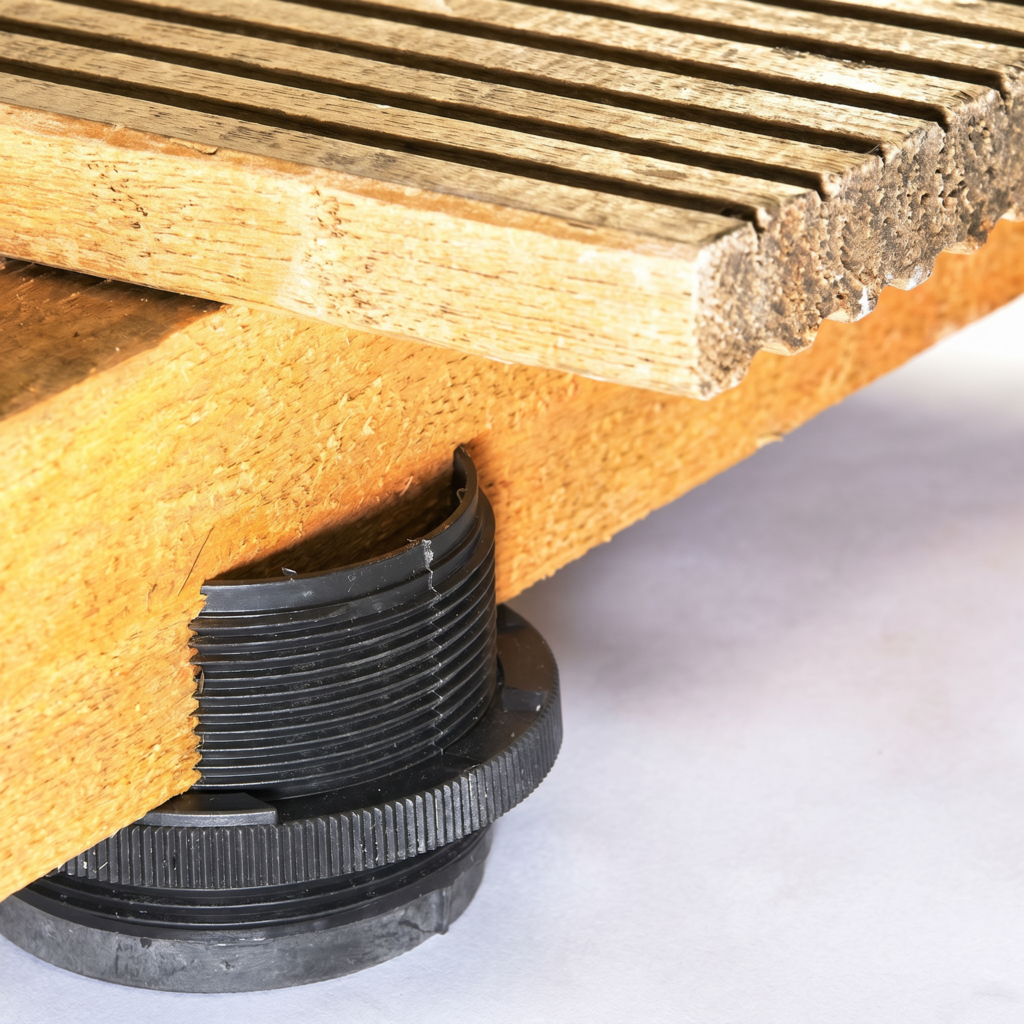
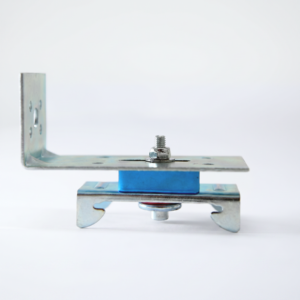
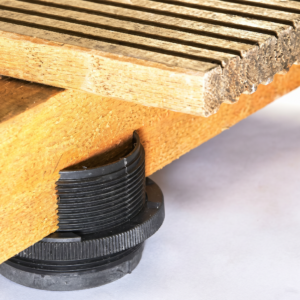
Hush Cradle Acoustic Timber Batten Support is an adjustable acoustic cradle designed to support timber battens or joists while helping reduce impact noise transfer through raised flooring, decking, balcony and roof terrace structures. Each cradle has a 90mm diameter, a 55mm height and an adjustable support range of approximately 10mm to 40mm.
The cradle uses a durable body with a cellular rubber base support. This helps spread the imposed load while softening impact vibration, making it useful where timber battens need to be levelled and acoustically separated from the structure below.
What is a Hush Cradle used for?
Hush Cradles are used to support and level timber battens or joists without relying on fiddly packers. They are commonly used where a raised timber batten system is required over an uneven base, including decking areas, roof terraces, balconies and acoustic floor build-ups.
The adjustable cradle helps create a level support system while maintaining an acoustic break between the timber batten and the structural base below.
How does the Hush Cradle work?
The Hush Cradle works by supporting a timber batten or joist above the structural base. The adjustable cradle allows the installer to raise or lower the batten position to achieve the correct level.
The cellular rubber base helps soften impact noise and reduce vibration transfer into the structure below. This makes the cradle useful where impact sound, footfall noise and structural vibration need to be considered as part of the floor or decking design.
What type of noise does the Hush Cradle help reduce?
Hush Cradles are mainly used to help reduce impact noise and vibration transfer. This includes footfall noise, movement across decking or flooring, and impact energy passing through timber battens into the structure below.
They are not normally used as a standalone soundproofing product. For improved airborne noise reduction, the wider system may also require acoustic mineral wool, acoustic boards, floating floor layers, acoustic sealant or a suitable ceiling treatment below.
Where can Hush Cradles be used?
Hush Cradles can be used in a range of timber batten and acoustic support applications, including:
- Raised timber batten systems
- Decking areas
- Balconies
- Roof terraces
- Timber joist support systems
- Acoustic floor build-ups
- Uneven floor levelling projects
- Refurbishment floor upgrades
- Domestic and light commercial flooring projects
- Projects requiring a small service void beneath timber battens
Why choose Hush Cradles?
Hush Cradles are useful where timber battens need to be levelled quickly and accurately. The adjustable cradle design removes the need for multiple packers and helps create a consistent support height across the floor or decking area.
The rubber base support also helps reduce impact vibration, making the cradle a practical option for acoustic flooring and raised decking applications where noise transfer needs to be controlled.
Key benefits
- Adjustable timber batten support — helps level battens over uneven surfaces.
- 90mm diameter cradle — provides a stable support base for timber battens or joists.
- 55mm cradle height — suitable for low-build-up raised support systems.
- 10–40mm adjustability — allows fine levelling without loose packers.
- Cellular rubber base support — helps soften impact noise and vibration transfer.
- Maximum load capability of 7kN/m² — suitable for many raised deck and batten support applications.
- Quick to install — helps reduce labour time compared with manual packing methods.
- Useful for uneven bases — helps correct falls, slopes and surface irregularities.
- Suitable for external applications — commonly used for decking, balconies and roof terraces.
- Works within complete acoustic systems — can be combined with timber battens, boards, acoustic insulation and resilient floor layers.
Helpful advice before buying
Hush Cradles should be used as part of a properly designed timber batten, decking or acoustic floor system. The final performance will depend on the structural base, batten spacing, board/decking layer, fixing method, load requirements and installation quality.
Before ordering, check the required finished floor height, batten size, loading requirement and available adjustment range. If a deeper build-up is required, additional base plates or a different cradle system may be needed.
If you are unsure whether Hush Cradles are suitable for your project, please contact our team before ordering. We can help advise on the most suitable acoustic floor or timber batten support system based on your structure, height requirement and noise issue.
Hush Cradle Acoustic Timber Batten Support Technical Specifications
Hush Cradle Acoustic Timber Batten Support is an adjustable cradle used to support timber battens and joists in raised flooring, decking, balcony, roof terrace and acoustic floor applications. It is designed to help level uneven bases while reducing impact noise and vibration transfer through the structure.
Product Specification
| Product Name |
Hush Cradle Acoustic Timber Batten Support |
| Brand |
Hush |
| Product Type |
Adjustable acoustic timber batten support / cradle support |
| Application |
Raised timber batten systems, decking, balconies, roof terraces and acoustic floor build-ups |
| Suitable For |
Timber battens, timber joists, decking support systems and acoustic floor support systems |
| Cradle Diameter |
90mm |
| Cradle Height |
55mm |
| Adjustment Range |
Approx. 10mm to 40mm |
| Base Support |
Cellular rubber base support |
| Maximum Load Capability |
7kN/m² |
| Main Noise Type |
Impact noise and vibration transfer |
| Installation Method |
Set out beneath timber battens or joists, adjusted to level, then secured as part of the batten/decking/floor system |
| Pack Size |
Sold individually unless otherwise stated on the product listing |
| Outdoor Use |
Suitable for decking, balcony and roof terrace support applications according to supplier data |
| Standalone Product? |
No — should be used as part of a complete timber batten, decking or acoustic floor system |
Suitable Applications
Hush Cradles can be used in a range of acoustic and timber support applications, including:
- Raised timber batten floors
- Balcony decking systems
- Roof terrace decking systems
- Garden decking support systems
- Acoustic floating floor build-ups
- Uneven floor levelling
- Timber joist support
- Refurbishment flooring projects
- Domestic and light commercial flooring projects
- Projects requiring impact noise reduction beneath timber battens
Acoustic Use
Hush Cradles are used to help reduce impact noise and vibration transfer by introducing a resilient support between the timber batten and the base below. The cellular rubber base helps soften impact energy before it passes into the structure.
They are commonly used where timber battens need support, levelling and acoustic separation. In higher-performance acoustic floor systems, they may be combined with acoustic insulation, acoustic decking boards, chipboard flooring, resilient layers and acoustic sealant.
Common System Uses
- Supporting timber battens over uneven concrete or timber bases
- Creating raised decking support systems
- Levelling timber battens on balconies and roof terraces
- Helping create a small service void beneath a raised floor
- Reducing direct batten-to-structure contact
- Supporting acoustic floor systems where impact noise control is required
- Used with timber battens, chipboard, decking boards or other suitable deck layers
- Used where loose packers would be slower or less practical
Important Performance Note
Hush Cradles are acoustic support components, not a complete soundproofing system on their own. The final acoustic result will depend on the full floor, deck or batten build-up.
Batten spacing, board/decking layer, loading, structural base, perimeter isolation, fixing method and flanking paths can all affect performance. For compliance-led projects, use the correct tested system data and seek project-specific acoustic advice where required.
Handling Advice
Store the cradles clean, dry and protected before installation. Before fitting, check that the base is stable, suitable for load bearing and free from loose debris.
Do not install onto unstable, rotten, weak or unsuitable surfaces. Check the full loading requirement before installation, especially for balconies, terraces, commercial areas or external decking projects.
How to Install Hush Cradle Acoustic Timber Batten Supports
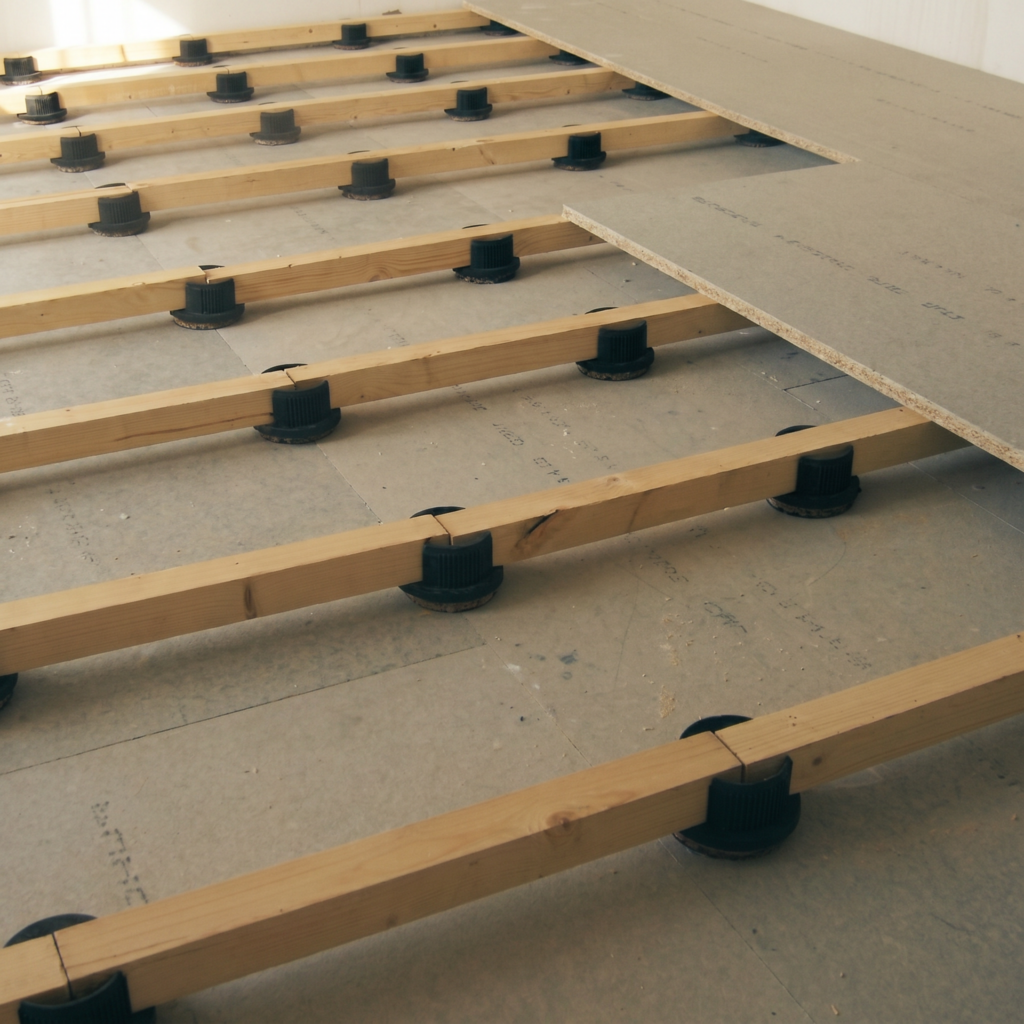
Hush Cradle Acoustic Timber Batten Supports are installed beneath timber battens or joists to create an adjustable raised support system. They help level uneven surfaces while reducing direct impact vibration transfer into the structure below.
For the best result, the base should be clean, stable, load-bearing and suitable for the complete batten, deck or floor system before the cradles are installed.
What You’ll Need
- Hush Cradle Acoustic Timber Batten Supports
- Suitable timber battens or joists
- Chipboard, decking boards or suitable floor/deck layer
- Tape measure
- Pencil or marker
- String line or laser level
- Spirit level
- Saw for cutting battens
- Drill/driver
- Suitable external-grade or internal fixings, depending on application
- Additional base plates or supports, where required by the system
- Acoustic sealant, where used in internal acoustic floor systems
- PPE gloves
- Safety glasses
- Knee pads
- Waste bag for offcuts
Before You Start
Check the base before installation. The surface should be clean, stable, load-bearing and suitable for the intended floor or deck system.
Confirm the required finished floor height, batten size, cradle spacing and adjustment range before setting out. Hush Cradles have an adjustment range of approximately 10mm to 40mm, so the base should be within the correct level tolerance for the system.
For external applications, such as balconies and roof terraces, make sure the structure is suitable for the added load and that waterproofing, drainage and falls are not compromised.
Step 1: Prepare the Base
Make sure the base is ready for installation. The surface should be:
- Clean
- Stable
- Load-bearing
- Free from loose debris
- Free from sharp projections
- Suitable for the intended floor or deck system
Do not install cradles onto unstable, rotten, weak or unsuitable surfaces. Any structural issues should be corrected before the system is installed.
Step 2: Plan the Batten Layout
Plan the timber batten layout before positioning the cradles. Mark the intended batten runs across the floor or deck area.
The correct spacing will depend on the batten size, board or decking layer, load requirement and system specification. Follow the floor/decking manufacturer’s guidance and any project-specific acoustic specification.
Where battens meet, plan the joint so both batten ends are properly supported.
Step 3: Set Out the Cradles
Place the cradles along the planned batten lines at the required centres.
Make sure each cradle is positioned on a stable part of the base and is not rocking. If the base is very uneven, additional preparation or support may be needed before installation.
Allow for cradles at batten ends, joints, perimeters and areas requiring extra support.
Step 4: Insert the Timber Battens
Place the timber battens or joists into the cradle supports.
Make sure the battens sit securely in the cradle and follow the planned layout. Where two battens meet, position the cradle so it gives adequate support to both ends where required.
Do not leave unsupported batten joints, weak edges or sections that could flex under load.
Step 5: Adjust the Cradle Height
Use a laser level, string line or spirit level to check the batten height.
Adjust the cradle to raise or lower the batten until the correct level is achieved. Work across the area gradually, checking each batten run as you go.
The aim is to create a level, stable support frame before the deck or floor layer is fitted.
Step 6: Check Stability and Support
Once the battens are level, check that the cradles are stable and that the battens are properly supported.
Check for:
- Rocking cradles
- Loose battens
- Unsupported joints
- Excessive batten flex
- Incorrect spacing
- Perimeter areas needing extra support
- Services or pipes interfering with the batten runs
Add additional cradles or supports where required by the system.
Step 7: Maintain Acoustic Separation
For acoustic applications, avoid creating rigid bridges between the raised batten system and the surrounding structure.
Where used internally, allow suitable isolation around perimeter edges and avoid hard contact with walls where the acoustic system requires separation. Seal perimeter gaps with acoustic sealant where specified.
For external decking, ensure the support system remains stable while avoiding unnecessary rigid contact that could increase vibration transfer.
Step 8: Install Services Where Required
If the cradle system is being used to create a small service void, plan services before fitting the deck or floor layer.
Do not notch or weaken battens unless the system designer or structural guidance allows it. Where pipes or cables pass through the area, provide proper support and keep the deck/floor layer stable.
Make sure services do not compromise the acoustic separation, drainage or structural performance of the system.
Step 9: Fit the Deck or Floor Layer
Once the cradle and batten system is level and stable, install the chosen deck or floor layer.
This may include:
- Decking boards
- Chipboard flooring
- Timber floor panels
- Acoustic flooring boards
- Other suitable floor or deck sheets
Follow the board or decking manufacturer’s fixing guidance. Use suitable fixings for the environment, especially in external applications.
Step 10: Final Checks
After the floor or deck layer is installed, check the full area for movement, rocking, loose boards or uneven sections.
Make sure:
- The finished surface is level
- The battens are properly supported
- There are no unsupported board joints
- The cradles are not overloaded
- Perimeter details are complete
- External areas still drain correctly
- No rigid acoustic bridges have been created where isolation is required
Installing Hush Cradles for Decking
For decking applications, position the cradles beneath the timber joists or battens according to the deck design. Check the direction of falls, drainage routes and finished deck height before installation.
Use external-grade battens, boards and fixings suitable for the environment. Do not block drainage paths on balconies or roof terraces.
Installing Hush Cradles for Internal Acoustic Floors
For internal acoustic floors, Hush Cradles can be used to support a raised batten floor system. The full build-up may also include acoustic mineral wool, acoustic decking boards, chipboard flooring, acoustic sealant and suitable perimeter isolation.
Do not treat the cradle alone as a complete acoustic floor system. The surrounding floor, ceiling and wall junctions all affect final performance.
Installation Tips
- Check the base is stable and load-bearing before installation.
- Plan the batten layout before placing cradles.
- Use a laser level or string line for accurate levelling.
- Support batten joints properly.
- Add extra cradles where loads, joints or edges require support.
- Do not install onto rotten, weak or unstable surfaces.
- Maintain acoustic separation where the system requires it.
- Use external-grade fixings for outdoor decking, balconies and roof terraces.
- Check drainage and falls on external projects.
- Use the cradle as part of a complete acoustic or raised floor system.
Important Soundproofing Note
Hush Cradle Acoustic Timber Batten Supports can help reduce impact vibration transfer by separating timber battens from the base below, but the final acoustic result depends on the full floor or deck system.
Batten spacing, deck layer, acoustic insulation, perimeter isolation, structural base, ceiling construction and flanking paths can all affect performance. If you are unsure how to use Hush Cradles in your project, please contact our team before installation.