MLV50 Acoustic Fence Wrap
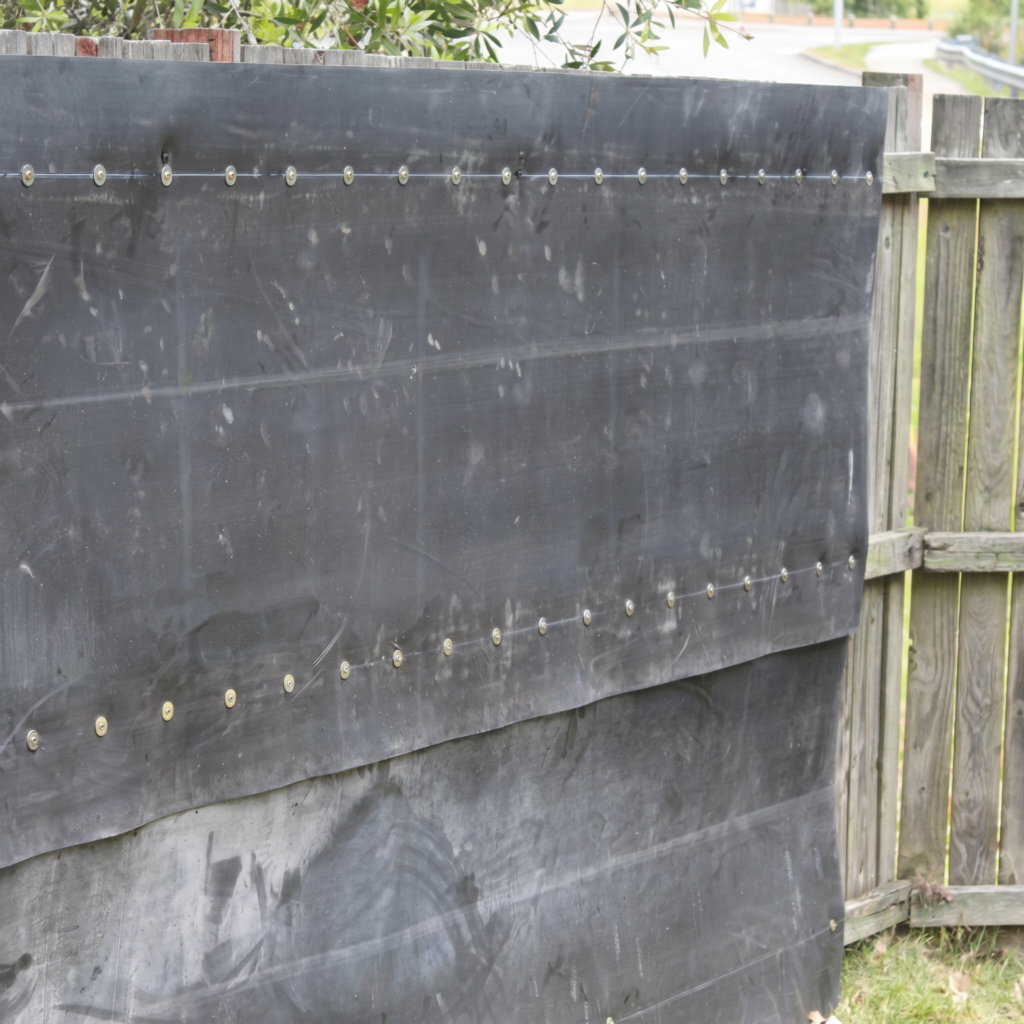
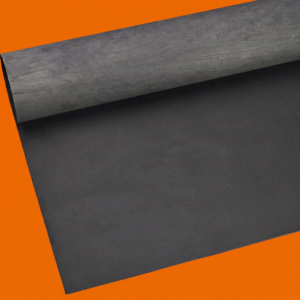
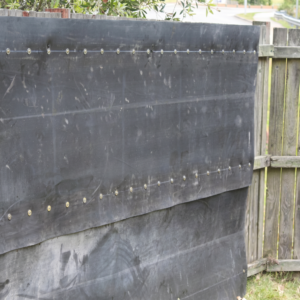
MLV50 Acoustic Fence Wrap is a dense acoustic barrier wrap designed to help reduce airborne noise passing through fencing, barriers and outdoor screen structures. Supplied in a 1.2m x 6m roll, it provides a flexible sound barrier layer with a mass of 5kg/m² and an approximate thickness of 2–3mm.
MLV50 Acoustic Fence Wrap is made from a mineral-loaded heavy acoustic membrane. It is commonly used to upgrade existing timber fencing, garden boundaries, site hoarding, external screens and other suitable outdoor barrier structures where road noise, neighbour noise, garden equipment noise or general external airborne noise needs to be reduced.
What is MLV50 Acoustic Fence Wrap used for?
MLV50 Acoustic Fence Wrap is used to add mass and improve the sound-blocking performance of an existing fence or outdoor barrier. Standard timber fences often have gaps between boards, weak points and limited mass, which can allow noise to pass through more easily.
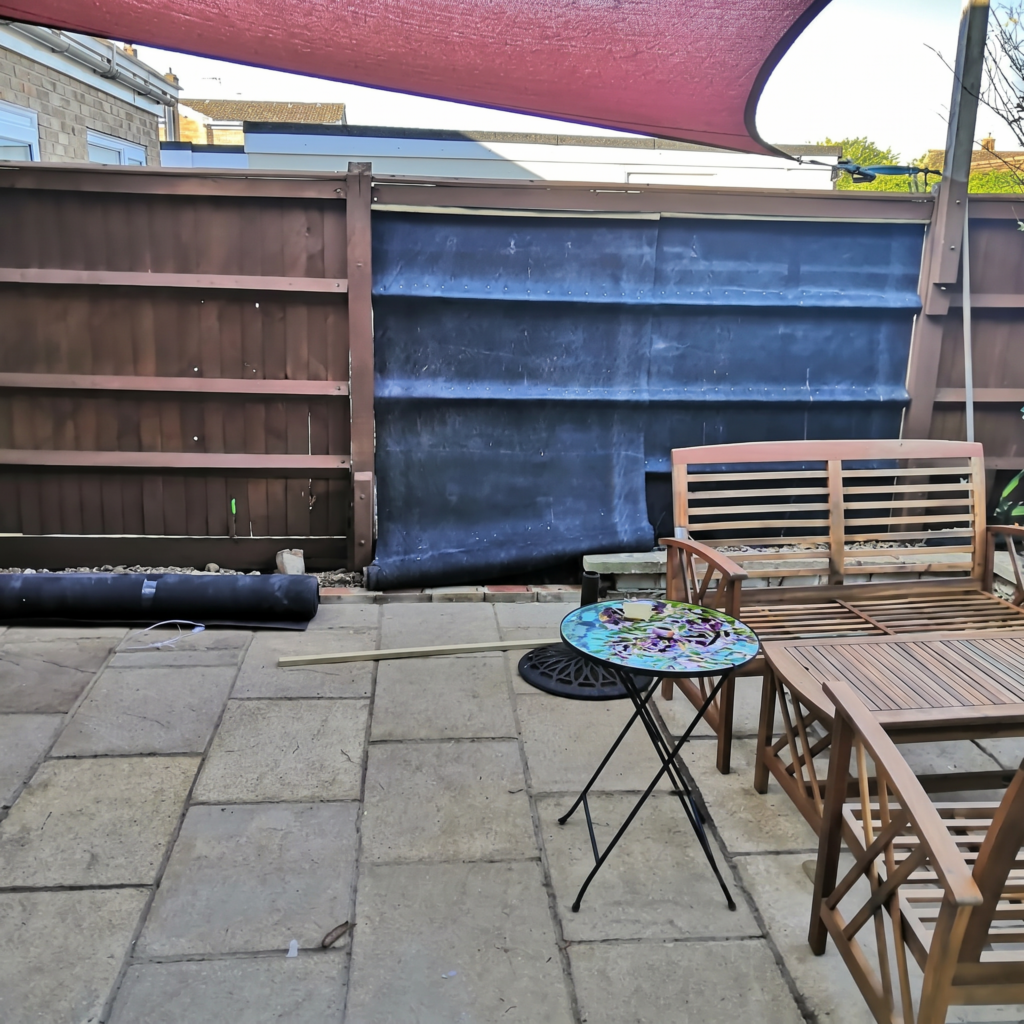
By fitting a continuous acoustic wrap to the fence structure, the barrier becomes denser and less acoustically transparent. This can help reduce airborne noise passing through the fence line when the wrap is installed correctly with good coverage and minimal gaps.
How does MLV50 Acoustic Fence Wrap work?
MLV50 works by adding a dense, flexible acoustic barrier to the fence. The mineral-loaded membrane adds mass, helping resist airborne sound transmission through the structure.
For outdoor noise control, continuity is very important. The wrap should be installed as a continuous layer with tight joints, sealed or overlapped edges where required, and minimal gaps around posts, rails, ground lines and corners.
The fence or barrier should also be tall and solid enough to interrupt the direct path between the noise source and the area being protected. If sound can travel over, under or around the barrier, the final result may be reduced.
What type of noise does MLV50 Acoustic Fence Wrap help reduce?
MLV50 Acoustic Fence Wrap is mainly used to help reduce airborne noise. This includes:
- Road noise
- Neighbour noise
- Garden machinery noise
- Outdoor plant and equipment noise
- General external noise through fences and barriers
- Noise passing through lightweight timber fencing
It is not designed to eliminate all outdoor noise. Sound can still travel over the top of a fence, around the sides, through gaps, or via nearby reflective surfaces. The best results usually come from a continuous, heavy and well-positioned barrier.
Where can MLV50 Acoustic Fence Wrap be used?
MLV50 Acoustic Fence Wrap is suitable for a range of external acoustic barrier applications, including:
- Timber garden fences
- External acoustic fence upgrades
- Boundary fences
- Garden screening
- Site hoarding
- Temporary acoustic screens
- Outdoor plant enclosures
- Commercial yard screening
- External noise barrier projects
- Domestic and light commercial refurbishment projects
Why choose MLV50 Acoustic Fence Wrap?
MLV50 Acoustic Fence Wrap is useful where an existing fence needs additional acoustic mass without replacing the full structure. At around 2–3mm thick, it adds a dense sound barrier layer while keeping the build-up relatively slim.
It is flexible, easy to cut and can be shaped around posts, rails and awkward fence details. It can also be used as part of a wider acoustic fence build-up with timber boards, battens, posts and weather-protective finishing layers.
MLV50 Fence Wrap vs standard acoustic membrane — what is the difference?
MLV50 Fence Wrap is intended for external barrier-style applications such as fences, hoarding and outdoor screens. Standard MLV50 acoustic membrane is more commonly used internally within walls, floors and ceilings.
Both products use the same basic principle of adding dense acoustic mass, but the fence wrap application focuses on outdoor airborne noise control and requires careful attention to weather exposure, fixing detail, wind loading, fence strength and barrier continuity.
Key benefits
- Outdoor acoustic fence wrap — suitable for external barrier and fence applications.
- 5kg/m² mass — adds useful acoustic mass to lightweight fence structures.
- Approx. 2–3mm thickness — slim acoustic barrier layer with minimal build-up.
- Helps reduce airborne noise — useful for road noise, neighbour noise and general external noise.
- 1.2m x 6m roll — practical roll size for fence and barrier coverage.
- Flexible material — can be cut and shaped around posts, rails and awkward details.
- Suitable for retrofitting — can be added to suitable existing fence structures.
- Mineral-loaded acoustic barrier — designed to block and reduce airborne sound transfer.
- Useful for domestic and commercial projects — suitable for gardens, yards, screens and enclosures.
- Works as part of a complete barrier system — performance depends on fence height, mass, coverage and sealing detail.
Helpful advice before buying
MLV50 Acoustic Fence Wrap performs best when used as part of a continuous outdoor noise barrier. The final result will depend on the existing fence construction, fence height, distance from the noise source, fixing method, gaps, joints, wind exposure and whether sound can travel over or around the barrier.
Before ordering, check that your fence is strong enough to support the added weight. At 5kg/m², a full roll is heavy, and the fence posts, rails and fixings must be suitable for the extra load.
If you are unsure whether MLV50 Acoustic Fence Wrap is right for your project, please contact our team before ordering. We can help advise on the most suitable acoustic fence or outdoor noise barrier approach based on your noise issue, fence type and available installation area.
MLV50 Acoustic Fence Wrap Technical Specifications
MLV50 Acoustic Fence Wrap is a mineral-loaded acoustic barrier wrap designed for outdoor fence and barrier applications. It is used to add mass to suitable fence structures and help reduce airborne noise transmission through lightweight outdoor barriers.
Product Specification
| Product Name |
MLV50 Acoustic Fence Wrap |
| Product Type |
Outdoor acoustic fence wrap / mass loaded acoustic barrier |
| Material |
Mineral-loaded flexible acoustic barrier membrane |
| Application |
External fencing, acoustic barriers, hoarding and outdoor screening |
| Suitable For |
Timber fences, garden fences, boundary fences, site hoarding, external screens and outdoor plant enclosures |
| Roll Size |
1.2m x 6m |
| Supplier Spec Note |
Some supplier information states 6m x 1.22m; confirm exact roll width before compliance or cutting calculations |
| Approx. Coverage |
Approx. 7.2m² per roll, based on 1.2m x 6m |
| Thickness |
Approx. 2–3mm |
| Mass |
5kg/m² |
| Approx. Roll Weight |
Approx. 36kg, based on 7.2m² coverage and 5kg/m² mass |
| Published Acoustic Performance |
Supplier data lists Rw(C,Ctr) rating of 27dB; final performance depends on the full barrier construction and installation conditions |
| Main Noise Type |
Airborne noise |
| Outdoor Use |
Suitable for outdoor applications according to supplier data |
| Recyclability |
Supplier data states the product is 100% recyclable |
| Installation Method |
Mechanically fixed or clamped to a suitable fence/barrier structure using appropriate fixings, battens or support system |
| Cutting Method |
Sharp utility knife or suitable cutting tool |
| Fire Rating |
Not confirmed in reviewed supplier data — confirm before compliance-led use |
| Standalone Product? |
No — should be used as part of a properly installed acoustic fence or outdoor barrier system |
Suitable Applications
MLV50 Acoustic Fence Wrap can be used in a range of outdoor acoustic applications, including:
- Garden fence soundproofing
- Boundary fence upgrades
- Road noise reduction projects
- Neighbour noise reduction projects
- Outdoor plant and equipment screening
- Site hoarding acoustic upgrades
- Temporary outdoor acoustic screens
- Commercial yard screening
- External barriers around noisy equipment
- Domestic and light commercial external noise control
Acoustic Use
MLV50 Acoustic Fence Wrap is used to add mass and improve the sound-blocking performance of outdoor fence and barrier structures. It is mainly used to reduce airborne noise passing through lightweight or gap-prone fence lines.
For best results, the wrap should form a continuous barrier. Gaps, loose joints, open fence boards, ground gaps and exposed corners can all allow sound to bypass the acoustic layer.
Common System Uses
- Fixed to existing timber garden fences
- Installed behind timber boards as an acoustic barrier layer
- Used with timber battens to clamp the wrap in place
- Used on site hoarding or temporary external screens
- Used around outdoor plant and equipment enclosures
- Combined with close-boarded fencing for improved barrier continuity
- Used where additional acoustic mass is required in an outdoor screen
- Used with careful sealing and overlapping to reduce sound leakage paths
Important Performance Note
MLV50 Acoustic Fence Wrap is an acoustic barrier material, not a complete guaranteed outdoor soundproofing system by itself. Outdoor noise reduction depends heavily on barrier height, barrier position, fence mass, installation quality, gaps, wind exposure and whether sound can travel over, under or around the barrier.
For road noise and neighbour noise, the fence should ideally block the direct line of sight between the noise source and the listener. If the barrier is too low, has gaps, or stops short at the sides, the improvement may be limited.
Published acoustic figures should be treated as product or test-condition dependent. Site conditions can vary significantly outdoors, so final results cannot be guaranteed from the material alone.
Handling Advice
MLV50 Acoustic Fence Wrap is heavy and should be handled carefully. Store the roll dry, protected and away from sharp objects before installation.
Before fitting, check that the fence posts, rails and boards are secure and capable of carrying the additional load. Replace rotten, loose or unstable fence sections before installing the wrap.
Cut carefully around posts, rails, corners and obstructions. Keep gaps as small as possible and make sure the wrap is well supported to prevent sagging, tearing or wind damage.
How to Install MLV50 Acoustic Fence Wrap
MLV50 Acoustic Fence Wrap is installed onto a suitable fence, hoarding or outdoor barrier structure to add acoustic mass and help reduce airborne noise passing through the barrier.
For the best result, the fence should be strong, stable, continuous and suitable for the added weight before the acoustic wrap is fitted.
What You’ll Need
- MLV50 Acoustic Fence Wrap
- Treated timber battens or suitable clamping strips
- External-grade screws or suitable fixings
- Large washers, where required
- External-grade acoustic tape or suitable jointing tape, where required
- External-grade sealant, where suitable
- Tape measure
- Pencil or marker
- Straight edge
- Sharp utility knife
- Drill/driver
- Saw for battens
- Staple gun, only for temporary positioning where suitable
- PPE gloves
- Safety glasses
- Work platform or ladder, where required
- Waste bag for offcuts
Before You Start
Check the existing fence or barrier before installation. It should be stable, secure and capable of supporting the extra weight of the acoustic wrap.
At 5kg/m², MLV50 Acoustic Fence Wrap is heavy. A full roll can add significant load to a fence, especially in windy conditions. Do not install it onto rotten, loose or unstable fencing.
Where possible, repair or replace damaged posts, rails and boards before fitting the wrap. Check that the fence is suitable for external fixings and that the installation will not overload the structure.
Step 1: Inspect the Fence Structure
Before fitting the acoustic wrap, inspect the full fence line.
Check for:
- Loose fence posts
- Rotten timber
- Damaged fence boards
- Loose rails
- Large gaps between boards
- Open gaps at the bottom of the fence
- Weak corners or unsupported sections
- Areas exposed to strong wind loading
Repair any weak areas before installation. The wrap should only be fixed to a sound and stable structure.
Step 2: Plan the Barrier Layout
Measure the fence height and length before cutting the wrap. MLV50 Acoustic Fence Wrap is supplied in a 1.2m x 6m roll.
Plan the layout so the wrap covers the fence area as continuously as possible. Try to avoid unnecessary small offcuts and avoid leaving open gaps at posts, corners or bottom edges.
For best acoustic performance, the wrap should cover the area where sound is passing through. A continuous barrier is much more effective than isolated patches.
Step 3: Decide Which Side to Fit the Wrap
MLV50 Acoustic Fence Wrap can be fitted to the most suitable side of the fence depending on access, appearance and exposure.
In many cases, it is fitted to the inside face of the fence and then covered with timber battens or an additional decorative board layer. This helps protect the wrap and improves the finished appearance.
Make sure the chosen side allows the wrap to be securely fixed and supported.
Step 4: Cut the Wrap to Size
Roll out the MLV50 Acoustic Fence Wrap on a clean, flat surface and mark the required size.
Use a sharp utility knife and straight edge to cut the wrap neatly. Cut carefully around:
- Fence posts
- Rails
- Corners
- Ground-level obstructions
- Garden walls
- Steps or changes in level
- Other fixed structures
Keep cuts neat and avoid leaving unnecessary gaps, as gaps can reduce acoustic performance.
Step 5: Position the First Section
Lift the first section of wrap into position. Large sections may require two people due to the weight of the material.
Position the wrap so it sits flat against the fence or support frame. Make sure it reaches the intended height and sits neatly against adjacent edges.
Temporary staples or clamps may be used to hold the wrap in place while permanent battens or fixings are installed, but do not rely on light temporary fixings as the final fixing method.
Step 6: Fix the Wrap Securely
Fix the MLV50 Acoustic Fence Wrap to the fence using suitable external-grade fixings.
A common method is to use treated timber battens or clamping strips over the wrap, then screw through the battens into the fence rails or support frame. This spreads the load and helps prevent the wrap tearing around individual fixings.
Use fixings at regular intervals so the wrap is well supported and does not sag. Pay close attention to corners, top edges, side edges and exposed areas.
Step 7: Treat Joints Between Sections
Install the next section of wrap with tight joints against the first section.
Where possible, butt joints tightly and cover them with suitable external-grade acoustic tape or a timber batten. In exposed outdoor locations, a small overlap may be used if it suits the system and does not create fitting issues.
The aim is to avoid open gaps between sections. Sound can pass through small openings, so joint treatment is important.
Step 8: Seal or Close Perimeter Gaps
Check the edges of the acoustic wrap after fixing. Pay close attention to:
- Bottom edge near the ground
- Top edge of the fence
- Side edges at posts
- Corners
- Gaps around rails or brackets
- Changes in ground level
Where suitable, close gaps with timber, battens, overlapping wrap, external-grade tape or appropriate sealant. Large open gaps will reduce the acoustic benefit of the barrier.
Step 9: Protect the Wrap Where Required
For long-term outdoor use, consider covering the wrap with timber boards, battens, screening or another suitable protective layer.
This can help improve appearance, protect the wrap from accidental damage and reduce direct exposure to weather and wind movement.
Make sure any cover layer does not create large gaps or openings that reduce the barrier performance.
Step 10: Check the Finished Barrier
Once installed, inspect the full fence line.
Check that:
- The wrap is securely fixed
- There are no loose or sagging sections
- Joints are tight or covered
- Perimeter gaps are closed where possible
- The fence remains stable
- The wrap is not flapping in the wind
- There are no sharp exposed fixing points
Outdoor acoustic barriers should be checked periodically, especially after strong winds or bad weather.
Installing MLV50 Fence Wrap on Timber Fencing
For timber fencing, fix the wrap to the fence frame or rails rather than relying only on thin fence boards. Use battens to clamp the wrap securely and spread the load.
If the fence has large gaps, open slats or weak boards, consider adding a solid backing or close-boarded layer before or after fitting the wrap.
Installing MLV50 Fence Wrap on Hoarding or Screens
For site hoarding or temporary screens, make sure the support frame is suitable for the added load and wind exposure.
Fix the wrap securely using battens, washers or clamping strips. Avoid loose edges that could flap, tear or create noise in the wind.
Installing MLV50 Fence Wrap Around Plant or Equipment
For outdoor plant and equipment enclosures, install the wrap as part of a wider acoustic screen. The barrier should block the direct sound path while still allowing any required airflow, maintenance access and safe operation of the equipment.
Do not block ventilation openings unless the equipment manufacturer confirms it is safe to do so.
Installation Tips
- Check the fence is strong enough before installation.
- Repair rotten or loose fencing before fitting the wrap.
- Use two people for large sections because the material is heavy.
- Cut the wrap neatly with a sharp utility knife.
- Keep joints tight and avoid gaps.
- Use battens or clamping strips to spread the load.
- Use external-grade fixings suitable for outdoor use.
- Close gaps at the ground, posts, corners and edges where possible.
- Protect the wrap with boards or screening where required.
- Check the installation after high winds or bad weather.
Important Soundproofing Note
MLV50 Acoustic Fence Wrap can help improve the acoustic performance of a fence or outdoor barrier, but the final result depends on the full installation.
Outdoor sound reduction is affected by fence height, barrier position, ground gaps, side gaps, nearby reflective surfaces, wind exposure and whether the barrier blocks the direct path between the noise source and listener.
If you are unsure how to use MLV50 Acoustic Fence Wrap in your project, please contact our team before installation. We can help advise on the most suitable outdoor acoustic barrier approach based on your fence type, noise issue and installation area.