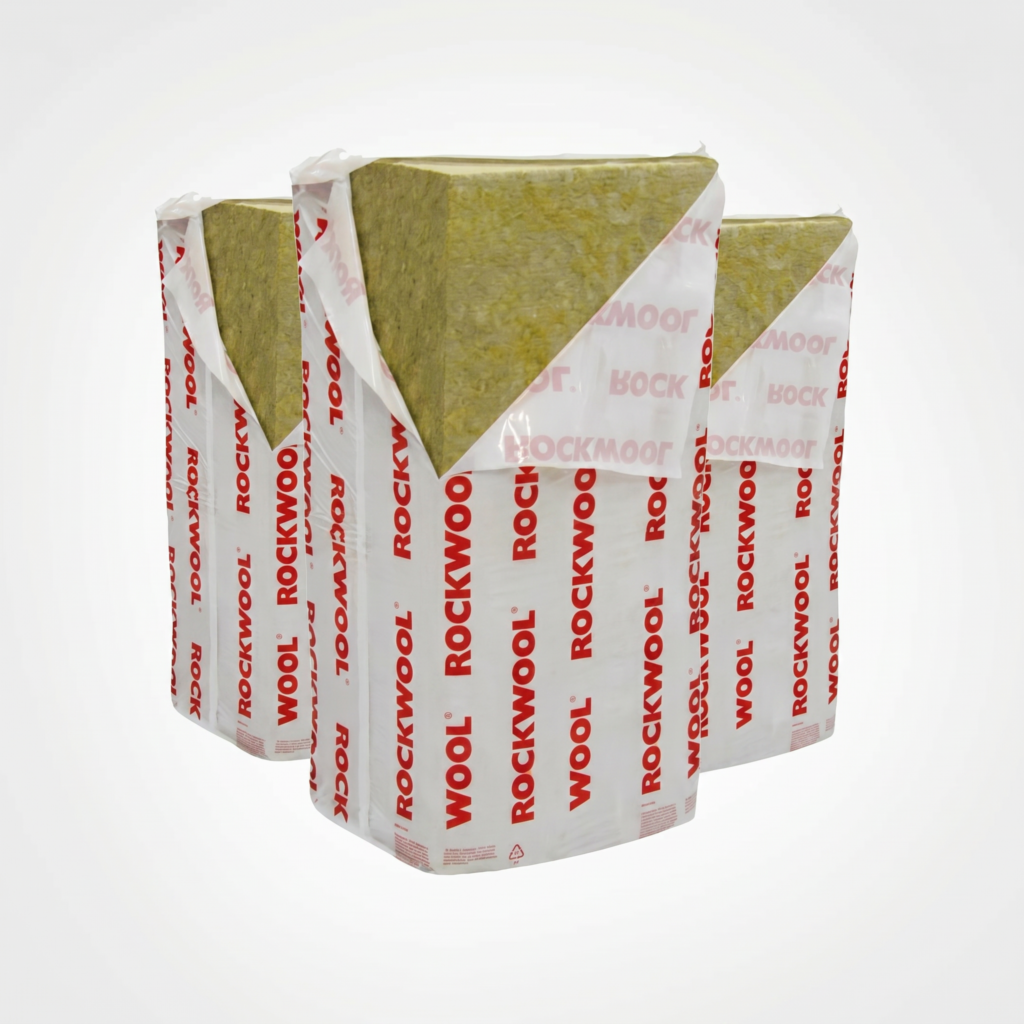
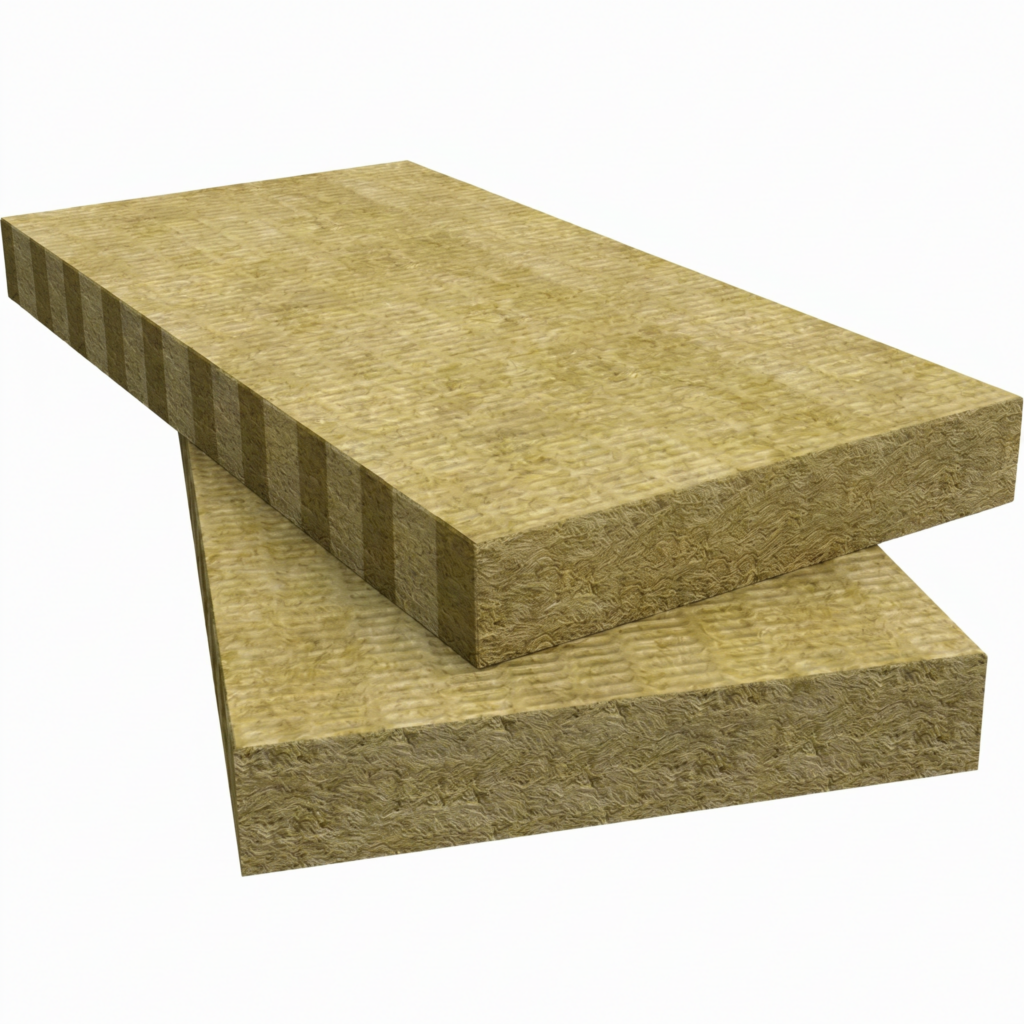
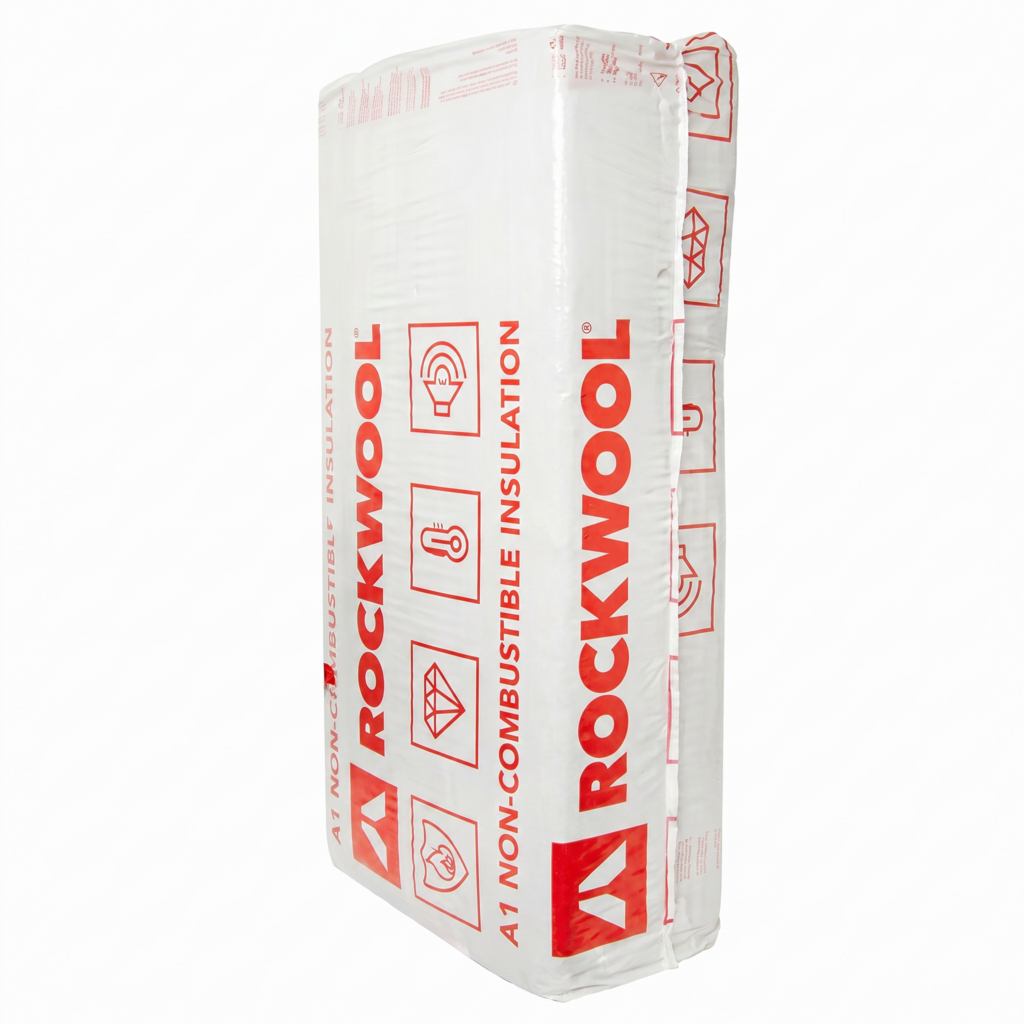
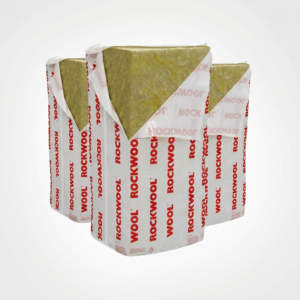
ROCKWOOL RW3 50mm Acoustic Mineral Wool
ROCKWOOL RW3 50mm Acoustic Mineral Wool is a high-quality acoustic insulation slab designed to improve sound absorption within walls, floors and ceilings. With a density of 60kg/m³, RW3 is widely used in soundproofing systems to help reduce airborne noise and improve the acoustic performance of building cavities.
This 50mm thickness is one of the most commonly used options for stud walls, ceiling voids, floor joists and acoustic partitions. It is suitable for both DIY soundproofing projects and professional trade installations where a reliable cavity insulation layer is required.
What is ROCKWOOL RW3 50mm used for?
ROCKWOOL RW3 50mm is used to fill cavities within acoustic wall, floor and ceiling systems. It helps absorb sound energy inside the void, reducing resonance and improving the overall performance of the complete soundproofing build-up.
It is commonly used in stud walls, party wall upgrades, timber floors, suspended ceilings, home offices, studios, flats, apartments and commercial refurbishments where airborne noise control is required.
How does RW3 acoustic insulation work?
RW3 works by absorbing sound within the cavity of a wall, floor or ceiling. When sound enters the structure, the mineral wool helps reduce echo, resonance and sound movement within the void.
It is important to understand that acoustic mineral wool is usually not used as a standalone soundproofing product. It performs best when combined with other materials such as acoustic plasterboard, Tecsound acoustic membranes, resilient bars, furring channels and acoustic sealant.
What type of noise does ROCKWOOL RW3 help reduce?
ROCKWOOL RW3 is mainly used to help reduce airborne noise. This includes voices, TV noise, music, office noise and general room-to-room sound transfer.
When used inside a floor or ceiling system, it can also support the wider acoustic build-up by reducing sound movement through the cavity. However, impact noise from footsteps usually also requires other materials such as acoustic underlays, resilient layers or floating floor systems.
Where can ROCKWOOL RW3 50mm be used?
ROCKWOOL RW3 50mm is suitable for a wide range of residential, commercial and trade soundproofing applications, including:
- Stud wall soundproofing
- Party wall upgrades
- Floor joist cavities
- Ceiling void insulation
- Suspended ceiling systems
- Home offices, studios and media rooms
- Flats, apartments and residential refurbishments
- Commercial offices, meeting rooms and shared spaces
Why choose 50mm RW3?
The 50mm thickness is a practical and versatile option for many acoustic cavities. It is especially useful where 75mm or 100mm slabs are too deep, or where the system needs a reliable acoustic insulation layer without overfilling the void.
For best results, the slab should fit neatly within the cavity without being heavily compressed. Over-compressing mineral wool can reduce its effectiveness, so it is important to choose a thickness that suits the available space.
Key benefits
- Acoustic cavity insulation — helps absorb sound within wall, floor and ceiling voids.
- 60kg/m³ density — suitable for acoustic insulation systems.
- 50mm thickness — a practical option for many common stud, joist and ceiling cavities.
- Helps reduce airborne noise — useful for voices, TV noise, music and general sound transfer.
- Works within complete systems — can be combined with acoustic boards, membranes, resilient bars and sealants.
- Suitable for DIY and trade — useful for home projects, refurbishments and professional installations.
- Easy to cut and fit — can be trimmed to suit joists, studs and awkward areas.
- Versatile use — suitable for walls, floors, ceilings, partitions and service voids.
Helpful advice before buying
ROCKWOOL RW3 50mm performs best when used as part of a full acoustic system. The final result will depend on the existing structure, cavity depth, supporting materials, installation quality and how well gaps and weak points are sealed.
For wall and ceiling soundproofing, RW3 is commonly combined with acoustic plasterboard, Tecsound acoustic membrane, resilient bars or furring channels and acoustic sealant. For floor systems, it is often used between joists as part of a wider floor soundproofing build-up.
If you are unsure whether 50mm RW3 is the right thickness for your project, please contact our team before ordering. We can help advise on the most suitable insulation and system based on your room, noise issue and available cavity depth.
ROCKWOOL RW3 50mm Technical Specifications
ROCKWOOL RW3 50mm Acoustic Mineral Wool is a semi-rigid stone wool insulation slab used for acoustic, thermal and fire insulation in walls, floors, ceilings, partitions and roof constructions. With a nominal density of 60kg/m³, RW3 is commonly used within soundproofing systems to absorb sound within cavities and reduce resonance.
Product Specification
| Product Name |
ROCKWOOL RW3 50mm Acoustic Mineral Wool |
| Brand |
ROCKWOOL |
| Product Type |
Acoustic mineral wool insulation slab |
| Material |
Stone wool / mineral wool |
| Application |
Walls, floors, ceilings, partitions, drylining systems and roof applications |
| Slab Size |
1200mm x 600mm |
| Thickness |
50mm |
| Density |
60kg/m³ |
| Pack Coverage |
5.76m² per pack |
| Slabs Per Pack |
8 slabs per pack |
| Thermal Conductivity |
0.034 W/mK |
| Fire Rating |
Euroclass A1 non-combustible, in accordance with EN 13501-1 |
| Product Standard |
EN 13162:2012+A1:2015 |
| Facing |
No facing as standard |
Suitable Applications
ROCKWOOL RW3 50mm can be used in a wide range of acoustic, thermal and fire insulation applications. It is commonly installed within:
- Stud walls and partition walls
- Party wall soundproofing systems
- Floor joist cavities
- Ceiling voids and suspended ceiling systems
- Drylining and acoustic wall systems
- Roof and general building insulation applications
- Home offices, studios, media rooms and commercial spaces
Acoustic Use
ROCKWOOL RW3 is used to help absorb sound within a wall, floor or ceiling cavity. Its stone wool fibre structure helps reduce sound movement inside the void and can improve the overall performance of a complete soundproofing system.
RW3 is mainly used to help with airborne noise, such as voices, TV noise, music and general room-to-room sound transfer. In floor and ceiling systems, it can also support the wider acoustic build-up by reducing resonance within the cavity.
Common System Uses
- Between timber studs in wall soundproofing systems
- Between floor joists as part of a floor soundproofing build-up
- Above suspended ceilings or within ceiling voids
- Behind acoustic plasterboard systems
- Combined with Tecsound acoustic membranes
- Combined with resilient bars or furring channel systems
- Used with acoustic sealant to reduce weak points around edges and junctions
Important Performance Note
ROCKWOOL RW3 is an acoustic insulation slab, not a complete soundproofing system on its own. It performs best when used inside a full wall, floor or ceiling build-up with suitable acoustic boards, membranes, isolation products and properly sealed joints.
The final soundproofing result will depend on the existing structure, cavity depth, installation quality, surrounding materials and how well gaps and flanking paths are controlled.
Handling Advice
ROCKWOOL RW3 slabs can be cut to fit between studs, joists and other framing. For best results, cut the slabs neatly so they fit snugly within the cavity without being heavily compressed. Over-compressing mineral wool can reduce its effectiveness within the acoustic build-up.
If you are unsure whether 50mm RW3 is the correct thickness for your project, please contact our team before ordering. We can help advise on the most suitable insulation and soundproofing system for your room, noise issue and available cavity depth.
How to Install ROCKWOOL RW3 50mm Acoustic Mineral Wool
ROCKWOOL RW3 50mm Acoustic Mineral Wool is designed to be fitted into wall, floor and ceiling cavities as part of an acoustic insulation system. It helps absorb sound inside the void, reduce resonance and improve the performance of the full soundproofing build-up.
The 50mm thickness is a practical option for many common stud walls, floor joists, ceiling voids and acoustic partitions. For best results, the slabs should be cut neatly and fitted snugly without being heavily compressed.
What You’ll Need
- ROCKWOOL RW3 50mm Acoustic Mineral Wool slabs
- Measuring tape
- Insulation saw or sharp serrated knife
- Straight edge or board for cutting
- Gloves
- Long-sleeved clothing
- Dust mask
- Safety glasses
- Waste bag for offcuts
- Acoustic sealant, if sealing around the system
Before You Start
Check the cavity depth before installing the slabs. ROCKWOOL RW3 50mm is best suited to cavities that can accept a 50mm slab without excessive compression.
If the cavity is shallower than 50mm, avoid forcing the slab into place. Over-compressing acoustic mineral wool can reduce its effectiveness and may leave the installation uneven.
Step 1: Prepare the Area
Before fitting the insulation, make sure the installation area is ready. The cavity or frame should be:
- Clean — remove dust, loose debris and leftover materials.
- Dry — avoid installing insulation into damp cavities.
- Clear — check for cables, pipework, fixings and other obstructions.
- Stable — make sure studs, joists or framing are secure before fitting.
Take care around electrical cables, pipework and other services. Do not cut or damage existing services when fitting the slabs.
Step 2: Measure the Cavity
- Measure the width and height of the cavity between studs, joists or framing.
- Check the cavity depth to confirm that 50mm RW3 is suitable.
- Mark the required slab size before cutting.
For a secure friction fit, cut the slab slightly oversized by a few millimetres. This helps the insulation stay in position and reduces gaps around the edges.
Step 3: Cut the RW3 Slabs
- Place the slab on a stable cutting surface.
- Use a straight edge or board as a cutting guide.
- Cut the slab using an insulation saw or sharp serrated knife.
- Trim neatly around pipes, cables and awkward shapes where needed.
Clean, accurate cutting helps the slab fit properly and keeps the cavity evenly filled. Try to avoid leaving empty spaces around the edges of the installation area.
Step 4: Fit the Slabs into the Cavity
- Place the cut slab into the cavity.
- Push it gently into position.
- Make sure it fits snugly between the studs, joists or framing.
- Check that the slab fills the space evenly without being crushed.
The slab should sit securely in place, but it should not be heavily compressed. A neat friction fit is usually best for acoustic performance.
Step 5: Fill Gaps and Awkward Areas
Use offcuts to fill small gaps around edges, pipes, joists and irregular spaces. The aim is to keep the cavity evenly filled with no obvious voids.
Sound can travel through weak points, so careful fitting around awkward areas can help improve the overall acoustic result.
Step 6: Add the Next Acoustic Layer
Once the RW3 is fitted, the next part of the soundproofing system can be installed. Depending on the project, this may include:
- Acoustic plasterboard
- Standard plasterboard
- TECSOUND acoustic membrane
- Resilient bars
- Furring channels
- Floating floor layers
- Acoustic sealant around edges and joints
ROCKWOOL RW3 performs best as part of a complete acoustic build-up. The insulation absorbs sound within the cavity, while boards, membranes and isolation products help add mass and reduce vibration transfer.
Installing RW3 50mm in Walls
For stud walls and party wall upgrades, fit the RW3 between the vertical studs. Cut each slab to fit snugly, then install the chosen plasterboard or acoustic lining system over the frame.
For better soundproofing performance, RW3 is commonly combined with acoustic plasterboard, Tecsound membrane, resilient bars or furring channels depending on the wall construction.
Installing RW3 50mm in Floors
For timber floor systems, fit RW3 between the floor joists. The slabs should sit securely in the void without dropping, sagging or leaving large gaps.
RW3 can help reduce sound movement through the floor cavity, but impact noise from footsteps usually requires additional products such as acoustic underlay, resilient layers or a floating floor system.
Installing RW3 50mm in Ceilings
For ceiling systems, fit RW3 between ceiling joists or within the ceiling void. Work carefully overhead and cut the slabs to manageable sizes where needed.
For improved ceiling soundproofing, RW3 is often used with resilient bars, furring channels, acoustic plasterboard, Tecsound membrane and acoustic sealant.
Installation Tips
- Wear PPE — use gloves, long sleeves, eye protection and a dust mask when cutting and fitting mineral wool.
- Cut slightly oversized — this helps the slabs friction-fit into the cavity.
- Avoid over-compression — heavily compressed insulation may reduce acoustic effectiveness.
- Fill the full cavity — avoid gaps around edges, joists, studs, pipes and cables.
- Use offcuts carefully — small pieces can fill awkward spaces and reduce waste.
- Choose the right thickness — 50mm RW3 is best for cavities that can accept this depth without crushing the slab.
- Use within a full system — combine with suitable acoustic boards, membranes and sealants for better results.
Important Soundproofing Note
ROCKWOOL RW3 is an acoustic insulation slab, not a complete soundproofing system by itself. It helps absorb sound inside the cavity, but the final result depends on the complete wall, floor or ceiling build-up.
For best results, combine RW3 with suitable acoustic boards, membranes, isolation products and acoustic sealant. If you are unsure whether RW3 50mm is the right thickness for your project, please contact our team before fitting. We can help advise on the most suitable system based on your room, cavity depth and noise issue.