Lorient LAS4002 40mm Threshold Plate
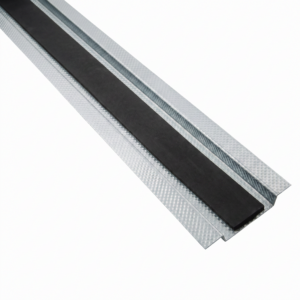
Lorient LAS4002 40mm Threshold Plate is a gently curved, low-profile aluminium threshold plate designed to provide a firm and even sealing surface beneath single and double swing doors.
Measuring 40mm wide and 5mm high, the LAS4002 can improve the effectiveness of automatic drop seals and face-fixed door-bottom seals by giving the sealing gasket a smooth, consistent surface against which to close.
Its slim, curved profile is suitable for wheeled traffic and creates a neat transition across the doorway without introducing a large or abrupt threshold.
What is the LAS4002 threshold plate used for?
The LAS4002 is installed on the floor or sill directly beneath the door.
It is commonly used to:
- Provide a smooth contact surface beneath an automatic drop seal
- Improve contact beneath a face-fixed door-bottom seal
- Bridge small joins between adjoining floor finishes
- Reduce inconsistencies caused by grout lines or uneven flooring
- Support smoke, weather, draught and light containment
- Create a low-profile transition suitable for wheeled traffic
- Form part of a complete acoustic door-sealing arrangement
How does the LAS4002 work?
Door-bottom seals work most effectively when their gasket closes against a firm, smooth and continuous surface.
Carpet, grout joints, uneven tiles, timber boards and changes between different floor finishes can prevent a gasket from making consistent contact across the full width of the doorway.
The LAS4002 creates a durable aluminium contact surface beneath the door. When the door closes, the automatic drop seal or door-bottom seal rests against the threshold plate rather than the uneven floor beneath it.
This helps create more uniform gasket contact and reduces open paths beneath the door.
Does the LAS4002 seal the door by itself?
No. The LAS4002 is a threshold plate and does not contain a flexible sealing gasket.
It should be used with a suitable automatic drop seal or face-fixed door-bottom seal where containment beneath the door is required.
Lorient states that the LAS4002 can be used with practically any suitable drop or door-bottom seal.
The correct combination will depend on:
- The available gap beneath the door
- The type and construction of the door
- The selected drop or door-bottom seal
- The floor finish
- The required containment performance
- The certification applying to the complete doorset
What type of containment can it support?
When used with a suitable threshold seal, the LAS4002 can contribute towards:
- Smoke containment
- Weather protection
- Draught reduction
- Light containment
- More consistent door-bottom sealing
The threshold plate does not provide these functions independently. Its purpose is to improve the surface against which the associated gasket seals.
Can the LAS4002 help with soundproofing?
The LAS4002 can form part of an acoustic door-sealing system by supporting consistent contact beneath an automatic drop seal.
Gaps beneath doors are a common sound-leakage path. Providing a smooth threshold surface can help the selected door-bottom seal close that path more effectively.
However, the LAS4002 does not have a standalone acoustic rating. Any quoted decibel performance applies to the complete tested door assembly and sealing arrangement, not to the threshold plate in isolation.
Acoustic performance will depend on:
- The construction and mass of the door leaf
- The perimeter seals
- The selected automatic drop seal
- The threshold adjustment
- The frame and surrounding construction
- Glazing, hardware and other openings
- The quality of installation
Why use a threshold plate beneath a drop seal?
An automatic drop seal may not make consistent contact when it closes directly onto an uneven or soft floor.
Possible problems include:
- The gasket sinking into carpet
- Gaps forming over grout joints
- Uneven tiles preventing continuous contact
- Changes in floor finish beneath the doorway
- The gasket touching only the highest points of the floor
- Floor wear changing the sealing surface over time
The LAS4002 provides a fixed aluminium surface across the doorway, helping the gasket maintain more consistent contact.
Where can the LAS4002 be used?
The LAS4002 is designed for use beneath single and double swing doors.
Suitable applications can include:
- Offices and meeting rooms
- Schools and education buildings
- Hotels and hospitality premises
- Healthcare environments
- Apartment and residential developments
- Commercial buildings
- Retail and leisure premises
- Public buildings
- Internal doorways
- Suitable external doorways
- Doors fitted with automatic drop seals
- Doors fitted with face-fixed door-bottom seals
For exterior installations, suitable sealant should be applied where the threshold plate meets the door stops to help prevent water ingress.
Is the LAS4002 suitable for wheeled traffic?
Yes. Lorient identifies the LAS4002 as suitable for wheeled traffic.
Its gently curved profile rises to only 5mm, creating a smoother transition than a threshold with abrupt vertical edges.
Project-specific accessibility requirements should still be checked before installation, particularly where the doorway forms part of an accessible route or compliance-led design.
LAS4001 vs LAS4002
The LAS4001 and LAS4002 use a similar gently curved, low-profile design but are available in different dimensions:
- LAS4001 — 25mm wide and 4mm high.
- LAS4002 — 40mm wide and 5mm high.
The LAS4002 provides a wider sealing surface and may be more suitable where the drop-seal contact area, floor transition or doorway layout requires additional width.
Key benefits
- 40mm-wide profile — provides a useful sealing surface beneath the door.
- Only 5mm high — creates a slim and unobtrusive threshold transition.
- Gently curved design — avoids an abrupt vertical threshold edge.
- Suitable for wheeled traffic — designed to allow wheels to travel across the profile.
- Improves gasket contact — provides a firm surface beneath automatic drop and door-bottom seals.
- Aluminium construction — durable and suitable for frequently used doorways.
- Anodised finish — provides a neat and resilient visible surface.
- Suitable for single and double doors — designed for single and double swing-door applications.
- Wide seal compatibility — can be used with practically any suitable drop or door-bottom seal.
- Helps manage uneven flooring — useful where the existing sealing surface is inconsistent.
- Supports multiple containment requirements — contributes towards smoke, weather, draught and light containment when combined with a suitable seal.
- Can be cut to length — standard lengths can be trimmed to suit the doorway.
- Screw or adhesive fixing — can be installed using an appropriate method for the floor substrate.
Helpful advice before buying
Measure the doorway and the clearance beneath the door before ordering.
Lorient states that the LAS4002 requires at least 6mm clearance between the door and floor for effective operation. The LAS4002 itself is 5mm high, so the door must have enough clearance to pass over the profile without rubbing.
Also confirm:
- The required threshold length
- The position of the drop or door-bottom seal
- The width of the required sealing surface
- The floor construction and proposed fixing method
- Whether pipes, cables or underfloor heating are present
- The required acoustic, smoke or weather performance
- Any fire-door or doorset certification requirements
The LAS4002 should be treated as one component within a complete door-sealing arrangement. It does not independently soundproof, smoke-seal or weather-seal a doorway.
Lorient LAS4002 40mm Threshold Plate Technical Specifications
Lorient LAS4002 is a gently curved, low-profile aluminium threshold plate measuring 40mm wide and 5mm high. It is designed to provide a smooth sealing surface beneath single and double swing doors.
Product Specification
| Product Name |
Lorient LAS4002 40mm Threshold Plate |
| Manufacturer |
Lorient |
| Product Reference |
LAS4002 |
| Product Type |
Gently curved, low-profile threshold plate |
| Width |
40mm |
| Overall Height |
5mm |
| Material |
Aluminium |
| Standard Finish |
Silver anodised aluminium |
| Alternative Finishes |
Bronze anodised and other powder-coated colour finishes may be available subject to non-standard charges, minimum order quantities and additional lead times |
| Standard Lengths |
1m and 2.1m |
| Special Lengths |
Other lengths may be available to special order |
| Door Types |
Single and double swing doors |
| Installation Position |
Floor or sill-mounted beneath the door |
| Minimum Door-to-Floor Clearance |
6mm |
| Compatible Seals |
Practically any suitable automatic drop seal or face-fixed door-bottom seal |
| Main Function |
Provides a firm and even surface against which a door-bottom gasket can seal |
| Containment Characteristics |
Contributes towards smoke, weather, draught and light containment when fitted with a suitable threshold seal |
| Wheeled Traffic |
Suitable for wheeled traffic |
| Fixing Methods |
Screw fixing or suitable construction adhesive, depending on the substrate and application |
| Supplied Fixings |
Stainless steel screws and plastic plugs are listed in the current fitting guide |
| Plate Drilling |
4.5mm fixing holes drilled through the plate and countersunk so the screw heads finish flush |
| Masonry Drilling |
6mm masonry holes where the supplied plastic plugs are suitable for the substrate |
| External Installation |
Apply suitable sealant where the plate meets the door stops to help prevent water ingress |
| Certification Reference |
UL R27972 is shown in Lorient’s current combined LAS4001 and LAS4002 product literature |
| Standalone Acoustic Rating |
None stated — performance depends on the complete tested door and sealing system |
| Standalone Smoke Rating |
None stated — containment depends on the associated threshold seal and complete doorset |
| Standalone Fire Rating |
No independent fire-resistance rating is stated for the threshold plate in the current product datasheet |
| Complete Seal? |
No — the LAS4002 is a threshold plate and requires a suitable drop or door-bottom seal |
Available Length Options
| Option |
Width |
Height |
Typical Use |
| LAS4002 1m |
40mm |
5mm |
Standard single-door openings, subject to the measured doorway width |
| LAS4002 2.1m |
40mm |
5mm |
Wider openings, double doors or cutting into project-specific lengths |
| Special-Order Length |
40mm |
5mm |
Non-standard doorways and project-specific requirements |
LAS4001 and LAS4002 Dimensions
| Product |
Width |
Height |
Profile |
| LAS4001 |
25mm |
4mm |
Gently curved, low-profile aluminium threshold plate |
| LAS4002 |
40mm |
5mm |
Gently curved, low-profile aluminium threshold plate |
Suitable Applications
The LAS4002 can be installed beneath:
- Single swing doors
- Double swing doors
- Doors fitted with automatic drop seals
- Doors fitted with face-fixed bottom seals
- Internal doors
- Suitable external doors
- Doors positioned over carpet
- Doors positioned over tiled flooring
- Doorways between different floor finishes
- Commercial and public-building doors
Threshold-Seal Compatibility
Lorient states that the LAS4002 can be used with practically any suitable drop or door-bottom seal.
The selected seal must be suitable for:
- The door type and construction
- The available gap beneath the door
- The opening direction
- The threshold width and profile
- The required containment performance
- The certification of the complete doorset
Where a particular acoustic, smoke or fire performance is required, use the complete component arrangement stated within the relevant test evidence or doorset certification.
Minimum Clearance Requirement
The current Lorient fitting guide states that the LAS4002 requires at least 6mm clearance between the door and floor for effective operation.
The threshold plate itself is 5mm high. The remaining clearance allows the door to travel over the plate without binding.
The door must continue to:
- Open freely
- Close completely
- Engage with the latch
- Operate without scraping across the threshold
Measure the clearance at multiple points across the doorway and throughout the door’s swing path, as floors may not be level.
Acoustic Performance Note
The LAS4002 has been included within selected Lorient tested acoustic door-sealing systems.
This does not give the threshold plate an independent decibel rating. The quoted rating for any tested arrangement applies to the complete door assembly and specified combination of components.
Final sound reduction will depend on:
- The mass and construction of the door leaf
- The perimeter seals
- The selected automatic drop seal
- The adjustment of the drop seal
- The frame and surrounding wall
- Glazing and ironmongery
- The quality of installation
Do not advertise or specify the LAS4002 as independently achieving a particular Rw or decibel rating.
Fire and Smoke Performance Note
The LAS4002 is a supporting threshold component and should not be treated as an independent fire or smoke seal.
Where it is proposed for use with a fire-rated or smoke-control door:
- Check the evidence for the complete doorset
- Confirm compatibility with the selected drop seal
- Do not replace specified components without approval
- Maintain all required intumescent and smoke seals
- Follow the door manufacturer’s installation requirements
Handling and Storage
Store the LAS4002:
- Flat and fully supported
- In a clean and dry location
- Away from moisture and site contamination
- Protected from bending and impact damage
- With the anodised face protected from scratching
Take care around freshly cut edges and remove sharp burrs before installation.
How to Install the Lorient LAS4002 40mm Threshold Plate
Lorient LAS4002 40mm Threshold Plate can be installed beneath single or double swing doors using suitable screw fixings or construction adhesive.
The plate should be measured and cut to suit the opening, positioned beneath the selected drop or door-bottom seal and securely fixed without preventing the door from opening, closing or latching correctly.
Always follow the current Lorient fitting guide and check the requirements of the complete doorset before installation.
What You’ll Need
- Lorient LAS4002 threshold plate in the required length
- Supplied stainless steel screws and plastic plugs, where suitable
- Tape measure
- Pencil or suitable marker
- Hand saw or power saw suitable for aluminium
- Power drill
- 4.5mm drill bit
- 6mm masonry drill bit, where appropriate
- Countersink bit
- Suitable construction adhesive, if adhesive fixing
- Suitable external-grade sealant, where required
- File or deburring tool
- Brush or vacuum for removing drilling dust
- Safety glasses
- Suitable gloves
- Hearing protection when using power tools
Before You Start
Inspect the door, frame and floor before cutting or fixing the threshold plate.
Check that:
- The door opens, closes and latches correctly
- There is at least 6mm clearance between the door and floor
- The floor is stable and suitable for the proposed fixing method
- The 40mm profile provides enough contact area for the selected seal
- The threshold will align with the drop or door-bottom seal
- There are no pipes, cables or underfloor-heating elements beneath the drilling area
- The plate will not create an unacceptable obstruction
- The proposed installation is compatible with any doorset certification
Measure the door clearance at several positions across the doorway and through the complete swing path. The floor may rise at one side or immediately beyond the closed-door position.
Step 1: Measure the Doorway
Measure the width of the doorway between the jambs or door stops to determine the required threshold length.
Take the measurement at the exact position where the threshold plate will be installed.
If the profile must fit around the door stops, measure each side carefully. Do not assume that the frame is square or that both stops are identical.
Step 2: Mark the Threshold Plate
Transfer the doorway measurement onto the LAS4002 using a pencil or suitable marker.
Clearly mark:
- The overall cut length
- Any profiling required around the door stops
- The intended orientation of the plate
- The position beneath the selected door-bottom seal
Check the measurements before cutting.
Step 3: Cut the Threshold Plate
Cut the aluminium threshold plate using a suitable hand or power saw.
Support the plate fully while cutting to prevent vibration, bending or damage to the anodised surface.
Cut slowly and accurately, particularly where the ends are being shaped around the door stops.
After cutting:
- Remove sharp edges and burrs
- Clean away aluminium swarf
- Check that the profile has not been distorted
- Confirm that the visible face has not been damaged
Step 4: Dry Fit the Threshold Plate
Position the threshold plate on the sill or floor in the required location before drilling or applying adhesive.
Check that:
- The plate fits neatly between the jambs or stops
- It is aligned beneath the closed door
- The selected gasket will contact the correct area
- The curved profile is fully supported
- The plate does not rock or move
- The door can pass freely over the 5mm-high profile
- The threshold does not interfere with the door swing
Carefully open and close the door while the unsecured plate is held safely in position.
Step 5: Choose the Fixing Method
The Lorient fitting guide provides two installation methods:
- Screw fixing
- Adhesive fixing
Choose the method that is appropriate for the floor construction, site conditions and project specification.
Screw fixing creates a mechanical connection but requires confirmation that the floor can be drilled safely.
Adhesive fixing avoids drilling but requires a sound, clean substrate and a construction adhesive compatible with both aluminium and the floor material.
Step 6A: Drill the Threshold Plate for Screw Fixing
Mark suitable fixing positions along the centre area of the threshold plate.
Using a power drill and a 4.5mm drill bit, drill fixing holes through the plate.
Space the holes sufficiently to hold the profile securely along its full length. Keep the holes away from the thin outer edges of the curved profile.
Countersink each hole so that the screw heads will finish flush with the surface.
Raised screw heads could:
- Interfere with wheeled traffic
- Damage the drop-seal gasket
- Create an uneven sealing surface
- Produce a snagging or trip point
Step 7A: Mark and Drill the Floor
Return the threshold plate to its final position and mark the fixing-hole centres onto the floor.
Remove the plate and drill the marked positions.
Lorient specifies a 6mm masonry drill bit where the supplied plastic plugs are suitable for the substrate.
Before drilling, confirm that:
- No pipes, cables or heating elements are present
- The floor material is suitable for the supplied plugs
- The drilling depth is appropriate
- The fixing method will not damage the floor construction
Use substrate-specific fixings where the supplied plugs are not suitable.
Remove all dust and debris before inserting the plugs.
Step 8A: Secure the Plate with Screws
Insert the plugs where appropriate and place the LAS4002 back into position.
Install the supplied screws and tighten them evenly along the plate.
Check that each screw head finishes flush within its countersunk hole.
Do not overtighten the fixings, as this could distort the curved aluminium profile or pull it unevenly against the floor.
The finished plate should be:
- Secure
- Fully supported
- Flat against the floor
- Free from movement
- Free from twisting or distortion
Step 6B: Prepare for Adhesive Fixing
Where adhesive fixing is appropriate, prepare the floor and underside of the threshold plate in accordance with the adhesive manufacturer’s instructions.
The contact surfaces should normally be:
- Clean
- Dry
- Stable
- Free from dust
- Free from grease, wax and loose material
Do not bond the threshold plate onto loose carpet, unstable finishes or contaminated surfaces.
Step 7B: Apply the Adhesive
Apply a suitable construction adhesive to the underside of the LAS4002.
Use enough adhesive to support the profile securely without applying so much that it spreads onto the visible surface or obstructs the curved edges.
Position the plate carefully and press it firmly into its final location.
Check the alignment immediately, as adjustment may become difficult once the adhesive begins to grip.
Step 8B: Support the Plate During Curing
Keep the plate firmly in position while the adhesive cures.
Use suitable weights or temporary restraint where permitted by the adhesive manufacturer, taking care not to bend or mark the aluminium profile.
Do not allow normal foot or wheeled traffic over the plate until the adhesive has achieved the required curing strength.
Curing time will depend on:
- The selected adhesive
- The floor material
- Temperature
- Humidity
- The quantity of adhesive applied
Step 9: Seal External Junctions
For exterior applications, Lorient states that sealant should be applied where the threshold plate meets the door stops to help prevent water ingress.
Use a suitable external-grade sealant compatible with:
- The aluminium threshold plate
- The frame or door-stop material
- The floor or sill
- The anticipated weather exposure
Apply the sealant neatly without blocking any required drainage paths.
Step 10: Adjust the Drop or Door-Bottom Seal
Once the threshold plate is secure, adjust the associated automatic drop seal or door-bottom seal according to its own fitting instructions.
The gasket should contact the LAS4002 consistently across the full width of the doorway.
Check for:
- Continuous gasket contact
- Open gaps at either end
- Insufficient contact in the centre
- Excessive gasket compression
- Uneven drop-seal operation
- Interference with the movement of the door
Do not over-adjust the seal. Excessive compression can increase opening forces, damage the gasket and place unnecessary strain on the drop-seal mechanism.
Step 11: Complete the Final Door Check
Open and close the door several times.
Confirm that:
- The door opens freely
- The door passes over the threshold without scraping
- The door closes completely
- The latch engages correctly
- The threshold remains securely fixed
- All screw heads are flush
- The plate does not flex or move
- The drop or door-bottom seal operates correctly
- The gasket contacts the threshold consistently
- No sharp edges or burrs remain exposed
The threshold plate must not impede the opening or closing of the door.
Installation Tips
- Confirm that there is at least 6mm clearance beneath the door.
- Measure the clearance at multiple points across the doorway.
- Dry fit the LAS4002 before drilling or applying adhesive.
- Check that the 40mm width aligns with the door-bottom gasket.
- Use a saw blade suitable for aluminium.
- Protect the anodised finish while cutting and drilling.
- Remove all burrs from cut edges and drilled holes.
- Countersink fixing holes so the screw heads finish flush.
- Check for concealed services and underfloor heating before drilling.
- Use fixings suitable for the actual floor substrate.
- Do not install the plate over loose or unstable flooring.
- Use suitable sealant at door-stop junctions in exterior applications.
- Adjust the associated door-bottom seal only after the threshold is secure.
- Check that the door continues to close and latch correctly.
Maintenance Advice
Inspect the LAS4002 periodically as part of the door’s normal maintenance programme.
Check for:
- Loose or raised fixing screws
- Movement of the threshold plate
- Damage or distortion to the aluminium profile
- Sharp or damaged edges
- Failed or separated adhesive
- Failed sealant at exterior junctions
- Dirt affecting gasket contact
- Changes in the door’s floor clearance
- Incorrect operation of the associated drop seal
Clean the plate with a soft cloth and a suitable mild cleaning product.
Avoid abrasive pads, wire brushes and aggressive chemicals that could damage the anodised finish.
Remove dirt and debris from the sealing surface so the door-bottom gasket can continue to make consistent contact.
Important Performance Note
The LAS4002 is a supporting threshold component. It does not provide complete acoustic, smoke, weather, draught or light containment by itself.
Final performance depends on:
- The associated automatic drop or door-bottom seal
- The perimeter seals
- The door and frame construction
- The gasket adjustment
- The surrounding construction
- The installation quality
Where the door forms part of a certified acoustic, smoke or fire-resisting assembly, install only the threshold and seal arrangement permitted by the relevant test evidence or doorset certification.