Lorient LAS8005 si Drop Seal
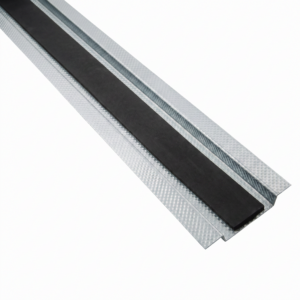
Lorient LAS8005 si Drop Seal is a slimline, mortised automatic door-bottom seal designed to reduce sound, smoke, draught and light transfer through the gap beneath a door.
The seal is recessed into a machined groove along the bottom edge of the door, creating a discreet installation with the main aluminium mechanism concealed within the door leaf.
Its mechanical actuator automatically lowers the silicone gasket when the door closes and retracts it when the door opens. No electrical power connection is required.
What is the LAS8005 si used for?
The LAS8005 si is installed within the bottom edge of a door to seal the gap between the door leaf and the floor, sill or threshold plate.
An untreated gap beneath a door can allow sound, smoke, draughts and light to pass between adjoining spaces. The LAS8005 si closes this gap automatically when the door shuts and lifts away from the floor when the door opens.
It is commonly used for:
- Reducing sound leakage beneath doors
- Supporting smoke containment at the threshold
- Reducing draughts between adjoining spaces
- Limiting visible light beneath a closed door
- Providing a concealed door-bottom sealing solution
- Completing an acoustic sealing system with suitable perimeter seals
- Sealing against a smooth floor, sill or threshold plate
How does the LAS8005 si work?
The LAS8005 si contains a spring-loaded mechanical drop-seal system operated by an actuator button at the hinge side of the door.
As the door closes, the actuator button meets the door frame or striker. This activates the internal mechanism and lowers the flexible silicone gasket onto the sill, floor or threshold plate.
When the door begins to open, pressure is released from the actuator and the gasket lifts clear of the floor after only a few millimetres of movement.
This helps reduce:
- Drag across the floor
- Wear to the silicone gasket
- Resistance when opening the door
- Damage to adjoining floor finishes
- Noise caused by a gasket scraping across the floor
Mortised installation
The LAS8005 si is a mortised automatic drop seal.
It is installed into a groove machined along the bottom edge of the door. Lorient’s current fitting guide specifies a groove measuring:
The seal is then secured through its pre-drilled and countersunk fixing flanges.
Mortised installation creates a discreet finish and is particularly suitable for new doors, workshop preparation and doors that can safely accommodate the required groove.
Acoustic performance
The LAS8005 si has been acoustically tested to BS EN ISO 10140-2:2010, with Lorient stating performance of up to Rw 33dB within the relevant tested door assembly.
The quoted figure applies to the complete tested doorset and sealing arrangement. It is not an independent 33dB rating for the drop seal itself.
Final acoustic performance will depend on:
- The construction and mass of the door leaf
- The door frame
- The perimeter sealing system
- The adjustment of the drop-seal gasket
- The floor or threshold surface
- Glazing and door hardware
- The frame-to-wall junction
- The overall installation quality
For effective acoustic containment, suitable seals should also be installed around the head and jambs of the door.
Smoke containment
The LAS8005 si has smoke-test evidence to:
- BS EN 1634-3:2004 at ambient temperature
- BS 476-31.1:1983
The seal can contribute towards smoke containment by closing the otherwise open gap beneath the door.
It should be combined with suitable smoke seals around the head and jambs. Final smoke performance depends on the complete doorset construction, associated seals and installation quality.
Fire-door applications
The LAS8005 si has fire-test evidence to BS 476-20/22:1987 and is suitable for use on appropriate fire-rated timber-based door assemblies.
Lorient states that a cladding kit must be used for the FD60 variant.
This does not mean that the drop seal independently provides 60 minutes of fire resistance. The fire performance applies only when it is installed as part of a suitable tested or assessed doorset arrangement.
Before installing the LAS8005 si on a fire-resisting door, confirm:
- That the product is permitted by the doorset evidence
- The approved door-leaf construction
- The permitted groove dimensions and position
- Whether the FD60 cladding kit is required
- The approved fixing method
- The compatible perimeter and threshold seals
- That machining the door will not invalidate its certification
Self-levelling operation
The LAS8005 si is designed to self-level across slightly uneven floor or threshold surfaces.
The gasket lowers progressively as the door reaches its closed position, helping it make contact across the width of the opening.
The amount of gasket movement can be adjusted independently of the fixing screws by turning the actuator button.
This allows the seal to be adjusted without removing or repositioning the aluminium housing.
What size gap can the LAS8005 si seal?
Lorient states a published operating range of:
- Minimum gap: 1mm
- Maximum drop: 13mm
The actuator should be adjusted so the silicone gasket touches the sill or threshold during the final closing movement of the door.
The gasket should make continuous contact without being compressed more than necessary.
Which doors can the LAS8005 si be used on?
The LAS8005 si is suitable for:
- Single swing doors
- Single-leaf doors
- Double-leaf doors
- Left-handed doors
- Right-handed doors
- Suitable timber-based door assemblies
- Aluminium doors prepared by door fabricators
- Acoustic door assemblies
- Smoke-control door assemblies
- Suitable fire-resisting doorsets where covered by evidence
The actuator button must be positioned at the hinge side so that it meets the frame or striker as the door closes.
Where can the LAS8005 si be used?
Suitable applications can include:
- Offices and meeting rooms
- Schools and education buildings
- Hotels and hospitality premises
- Healthcare environments
- Apartment and residential developments
- Recording and media rooms
- Consultation and treatment rooms
- Commercial fit-outs
- Public buildings
- Doors requiring concealed acoustic or smoke sealing
Can it be used with a threshold plate?
Yes. Lorient states that the LAS8005 si can be used with any suitable threshold plate.
A threshold plate provides a firm, smooth and consistent surface against which the silicone gasket can close.
This can be particularly useful where the existing floor is:
- Carpeted
- Uneven
- Interrupted by grout joints
- Formed from different adjoining finishes
- Subject to wear or compression
Lorient illustrates the LAS8005 si with the LAS4002 40mm threshold plate, although another suitable threshold plate may be used where permitted by the project specification and doorset evidence.
Can it be used with perimeter seals?
Yes. Lorient recommends using the LAS8005 si with a suitable perimeter seal.
The drop seal treats the threshold gap, while perimeter seals treat the:
- Head of the door
- Hinge-side jamb
- Closing-side jamb
Using both creates a more continuous sealing arrangement around the door leaf.
Key benefits
- Mortised installation — recessed into the bottom edge of the door for a discreet finish.
- Automatic operation — lowers when the door closes and retracts when it opens.
- Up to Rw 33dB — acoustic test evidence is available for relevant complete door assemblies.
- Smoke-test evidence — tested to BS EN 1634-3:2004 and BS 476-31.1:1983.
- Fire-test evidence — tested to BS 476-20/22:1987 for suitable doorset arrangements.
- FD60 option available — Lorient requires the appropriate cladding kit for the FD60 variant.
- Self-levelling mechanism — helps maintain contact across slightly uneven surfaces.
- Adjustable drop — movement is controlled using the actuator button.
- Independent adjustment — gasket movement can be changed without repositioning the fixing screws.
- No electrical connection — operation is entirely mechanical.
- Reduced opening resistance — the gasket lifts after only a few millimetres of door movement.
- Suitable for either handing — compatible with right- and left-handed doors.
- Suitable for single and double doors — can be used on single- and double-leaf arrangements.
- Compatible with threshold plates — can close onto a suitable smooth threshold surface.
- Compatible with perimeter seals — suitable for use as part of a complete door-sealing system.
- Suitable for wheeled traffic — the gasket retracts clear of the floor when the door opens.
- Durability tested — tested to 100,000 operating cycles.
- Fixings supplied — fixing holes are pre-drilled and countersunk.
Helpful advice before buying
Measure the door width and confirm that the door can safely accommodate a groove measuring 14mm wide and 35mm deep.
The LAS8005 si is supplied in fixed length increments and may only be shortened within Lorient’s stated cut-back limits.
Also check:
- The gap beneath the door
- The door thickness and internal construction
- The position of internal rails, glazing and hardware
- The hinge side of the door
- The selected floor or threshold surface
- The required acoustic, smoke or fire performance
- Whether an FD60 cladding kit is required
- The doorset test evidence or certification
- Whether machining the door is permitted
Drop seals shorter than 635mm use a single-spring mechanism and may not operate correctly until they are fully fitted and activated by the closing door.
Lorient LAS8005 si Drop Seal Technical Specifications
Lorient LAS8005 si is a slimline, mortised automatic drop seal with a self-levelling silicone gasket. It is installed within a machined groove along the bottom edge of the door.
Product Specification
| Product Name |
Lorient LAS8005 si Drop Seal |
| Manufacturer |
Lorient |
| Product Reference |
LAS8005 si |
| Product Type |
Automatic mortised door-bottom drop seal |
| Installation Type |
Mortised and screw-fixed through the flanges |
| Application |
Sealing the threshold gap beneath single and double swing doors |
| Operating Method |
Mechanical actuator lowers the gasket as the door closes and retracts it when the door opens |
| Power Requirement |
None — mechanically operated |
| Required Groove Width |
14mm |
| Required Groove Depth |
35mm |
| Approximate Flange Width |
35mm overall according to the current profile drawing |
| Published Minimum Gap |
1mm |
| Published Maximum Drop |
13mm |
| Seal Material |
Grey silicone rubber as standard |
| Carrier Material |
Aluminium |
| Self-Levelling |
Yes — designed to adjust across slightly uneven floor or threshold surfaces |
| Adjustment |
Actuator-button adjustment independent of the fixing screws |
| Adjustment Direction |
Clockwise reduces movement; anti-clockwise increases movement |
| Door Types |
Single swing, single-leaf and double-leaf doors |
| Door Handing |
Suitable for right- and left-handed doors |
| Actuator Position |
Hinge side of the door |
| Door Construction |
Suitable timber-based door assemblies; may be fitted into aluminium doors by door fabricators |
| Use With |
Any suitable perimeter seal and threshold plate |
| Acoustic Test Standard |
BS EN ISO 10140-2:2010 |
| Acoustic Test Evidence |
Up to Rw 33dB within the relevant tested door assembly |
| Smoke Test Standards |
BS EN 1634-3:2004 at ambient temperature and BS 476-31.1:1983 |
| Fire Test Standard |
BS 476-20/22:1987 |
| FD60 Requirement |
The appropriate cladding kit must be used for the FD60 variant |
| Durability |
Tested to 100,000 operating cycles |
| Containment Characteristics |
Contributes towards sound, smoke, draught and light containment |
| Wheeled Traffic |
Suitable; the gasket retracts when the door opens |
| Standard Finish |
Silver anodised aluminium with grey end caps and grey silicone rubber gasket |
| Non-Standard Finish |
Black end caps and black silicone gasket may be available subject to charges, minimum order quantities and additional lead times |
| Fixing Method |
Screw-fixed through pre-drilled and countersunk flange holes |
| Fixing Screws |
Supplied |
| End Caps |
Two end caps supplied |
| Striker Button |
One striker button supplied |
| Certifire Reference |
CF5179 |
| UL Certification Reference |
R27972 |
| Positive-Pressure Classification |
5DL3 classification shown in the current fitting guide |
| Short-Length Mechanism |
Lengths below 635mm use a single spring and operate correctly only when fully fitted and in use |
| Standalone Acoustic Rating? |
No — Rw 33dB applies to a relevant tested complete door assembly |
| Standalone Fire Rating? |
No — fire performance depends on the complete tested or assessed doorset arrangement |
Standard Lengths and Cut-Back Limits
| Supplied Length |
Minimum Permitted Cut Length |
| 335mm |
255mm |
| 435mm |
335mm |
| 535mm |
435mm |
| 635mm |
535mm |
| 735mm |
635mm |
| 835mm |
735mm |
| 935mm |
835mm |
| 1035mm |
935mm |
| 1135mm |
1035mm |
| 1235mm |
1135mm |
Cutting Restrictions
The LAS8005 si must only be shortened from the end opposite the actuator button.
Do not cut the seal below the minimum permitted length stated for the supplied size. Cutting the product too short can interfere with the internal spring and operating mechanism.
When shortening the seal:
- Pull the silicone gasket back from the cutting area
- Cut the aluminium sections to the required length
- Remove all cutting swarf and debris
- Push the gasket back into position
- Trim the gasket to length using a sharp knife
Suitable Applications
The LAS8005 si can be used on:
- Single swing doors
- Single-leaf doors
- Double-leaf doors
- Left-handed doors
- Right-handed doors
- Suitable timber-based door assemblies
- Aluminium doors prepared by door fabricators
- Acoustic doorsets
- Smoke-control doorsets
- Fire-resisting doorsets where supported by relevant evidence
- Internal commercial and public-building doors
Acoustic Performance Note
Lorient states acoustic test evidence of up to Rw 33dB in accordance with BS EN ISO 10140-2:2010.
This figure applies to a complete tested door assembly and does not represent the independent sound reduction of the LAS8005 si.
Final performance will depend on:
- The construction and mass of the door leaf
- The perimeter sealing system
- The floor or threshold surface
- The drop-seal adjustment
- Glazing and ironmongery
- The door frame and surrounding wall
- The installation workmanship
Smoke Performance Note
The current Lorient product information lists smoke-test evidence to:
- BS EN 1634-3:2004 at ambient temperature
- BS 476-31.1:1983
The LAS8005 si should be used as part of a complete smoke-sealing arrangement with suitable seals around the head and jambs.
Final smoke performance depends on the complete door construction and tested component arrangement.
Fire and Certification Note
The current Lorient datasheet lists fire-test evidence to BS 476-20/22:1987.
Lorient also states that:
- The seal is suitable for use on appropriate fire-rated timber-based door assemblies
- The required cladding kit must be used for the FD60 variant
- The product carries Certifire reference CF5179
- The product carries UL reference R27972
These references should not be interpreted as an independent fire-resistance period for the drop seal.
For a fire-resisting door:
- Confirm the LAS8005 si is permitted by the doorset evidence
- Confirm the 14mm × 35mm mortise is permitted
- Use the specified FD60 cladding kit where required
- Follow the approved fixing and installation arrangement
- Do not remove or damage required intumescent and smoke seals
- Do not machine through internal door components
- Follow the door manufacturer’s instructions
Threshold Compatibility
The LAS8005 si can operate directly against a suitable smooth floor or sill.
A threshold plate can provide more consistent gasket contact where the existing surface is:
- Soft
- Uneven
- Worn
- Interrupted by grout joints
- Formed from different adjoining finishes
The selected threshold plate must be compatible with the available clearance, the 13mm maximum drop and the applicable doorset evidence.
Handling and Storage
Store the LAS8005 si:
- Flat and fully supported
- In a clean and dry location
- Protected from bending and impact damage
- With the actuator button protected from impact
- With the fixing flanges protected from distortion
- With the silicone gasket protected from cutting or crushing
Do not allow dust, timber chips or metal swarf to enter the internal mechanism.
How to Install the Lorient LAS8005 si Drop Seal
Lorient LAS8005 si Drop Seal is mortised into a groove machined along the bottom edge of the door.
The seal should be positioned on the centre line of the door, with the actuator button located at the hinge side.
It must only be shortened from the end opposite the actuator button and must not be cut below Lorient’s stated minimum cut-back length.
Always check the current Lorient fitting guide and the evidence for the complete doorset before installation.
What You’ll Need
- Lorient LAS8005 si drop seal in the appropriate length
- Two supplied end caps
- Supplied fixing screws
- Supplied striker button
- Tape measure
- Pencil or suitable marker
- Hand saw or power saw suitable for aluminium
- Screwdriver
- Power drill or hand drill
- 2.5mm drill bit
- Router
- Long-series router bit suitable for the required groove
- Router guide or fence
- Sharp knife, scissors or snips
- File or deburring tool
- Vacuum or extraction equipment
- Suitable door supports or restraints
- Safety glasses
- Suitable gloves
- Hearing protection
- Suitable respiratory protection when routing timber
Before You Start
Inspect the door, frame and threshold before machining or fitting the seal.
Check that:
- The door opens, closes and latches correctly
- The hinges and frame are secure
- The door can safely accommodate a 14mm-wide × 35mm-deep groove
- The groove will not cut through internal rails, fixings, glazing or hardware
- The seal can be positioned on the centre line of the door
- The actuator button can be positioned at the hinge side
- The gap beneath the door is within the 1mm to 13mm operating range
- The floor or threshold provides a suitable sealing surface
- The selected length can be reduced to the required size
- The machining is permitted by any applicable doorset certification
- The correct FD60 cladding kit has been obtained where required
Do not machine a fire-rated, hollow, glazed or specialist door until the proposed groove has been checked against the door manufacturer’s evidence.
Step 1: Check the Supplied Length
Remove the LAS8005 si from its packaging and identify:
- The actuator-button end
- The end from which the seal can be shortened
- The supplied seal length
- The minimum permitted cut-back length
The current cut-back limits are:
- 335mm can be reduced to 255mm
- 435mm can be reduced to 335mm
- 535mm can be reduced to 435mm
- 635mm can be reduced to 535mm
- 735mm can be reduced to 635mm
- 835mm can be reduced to 735mm
- 935mm can be reduced to 835mm
- 1035mm can be reduced to 935mm
- 1135mm can be reduced to 1035mm
- 1235mm can be reduced to 1135mm
Do not cut the seal below the minimum length stated for the supplied size.
Step 2: Remove and Support the Door
Remove the door from its hinges.
Lay the door securely on its side and restrain it so that it cannot move while being measured, routed or drilled.
Support the door across its full length to avoid:
- Bending the door leaf
- Damaging the faces or edges
- Breaking glazing or decorative finishes
- Allowing the door to move during routing
If the bottom edge is already correctly grooved to suit the LAS8005 si, clean and inspect the groove before continuing.
Step 3: Mark the Seal Position
Measure and mark the seal position along the bottom edge of the door.
For optimum operation, Lorient instructs that the seal should be positioned on the centre line of the door.
Mark the complete routing area clearly.
Check that the proposed groove:
- Runs straight along the door bottom
- Is centred within the available door thickness
- Does not conflict with internal door components
- Leaves adequate material on both faces of the door
Step 4: Machine the Mortise
Fit a suitable long-series cutter to the router and set the guide.
Machine a continuous groove along the bottom of the door measuring:
Route the groove in controlled passes rather than attempting to remove the full depth in one pass.
Keep the router stable and maintain a straight, consistent mortise.
Use suitable extraction to control timber dust and chips.
Step 5: Clean and Check the Groove
Remove all timber chips, dust and debris from the groove.
Measure the finished mortise to confirm that it is:
- 14mm wide
- 35mm deep
- Straight
- Continuous
- Free from obstructions
- Wide enough for the seal without excessive force
- Not so wide that the seal becomes loose
Dry fit the LAS8005 si to confirm that the housing sits correctly and the fixing flanges rest against the bottom edge of the door.
Step 6: Measure the Required Seal Length
Measure the width of the door at the bottom edge.
Subtract the combined thickness of the end plates before marking the aluminium seal for cutting.
The finished drop seal should fit neatly across the door without the end caps binding against the frame or door stops.
Check the required finished length against the minimum cut-back size for the supplied seal.
Step 7: Pull Back the Silicone Gasket
At the end opposite the actuator button, carefully pull the silicone gasket away from the section that needs to be cut.
Move enough gasket away from the cutting position to prevent the saw from damaging it.
Do not:
- Cut from the actuator-button end
- Stretch the gasket excessively
- Cut through the gasket with the aluminium housing
- Damage the internal operating mechanism
Step 8: Cut the Aluminium Sections
Using a suitable power saw or hacksaw, cut the aluminium sections to the marked finished length.
Support the seal securely while cutting to prevent vibration or distortion.
After cutting:
- Remove all aluminium swarf
- Remove sharp edges and burrs
- Clean debris from the housing
- Check that the fixing flanges remain straight
- Confirm that the internal mechanism has not been damaged
Do not leave metal swarf inside the operating mechanism.
Step 9: Reposition and Trim the Gasket
Push the silicone gasket back into its normal position.
Allow it to sit naturally without stretching or bunching.
Trim the gasket to the finished length using a sharp knife, scissors or suitable snips.
The gasket should finish neatly inside the end-cap arrangement without being pulled tight or left excessively long.
Step 10: Position the Seal in the Groove
Place the LAS8005 si into the machined groove.
Make sure the actuator button is positioned at the hinge side of the door.
Check that:
- The seal sits fully within the groove
- The housing is straight
- The fixing flanges sit flat against the door bottom
- The actuator button moves freely
- The gasket is not trapped or twisted
- The end caps can be installed correctly
Step 11: Mark and Drill the Fixing Holes
Use the pre-drilled and countersunk holes in the fixing flanges to mark the pilot-hole positions on the bottom edge of the door.
Remove or hold the seal aside and drill suitable pilot holes using the 2.5mm drill bit listed in Lorient’s fitting guide.
The pilot-hole depth must suit:
- The supplied fixing screws
- The door construction
- The available fixing material
- The doorset manufacturer’s requirements
Do not drill into concealed door hardware, glazing channels or structural components.
Step 12: Screw-Fix the Seal
Return the LAS8005 si to the groove and secure it using the supplied screws.
Tighten the screws evenly through the fixing flanges.
Do not overtighten the fixings, as this could:
- Distort the aluminium housing
- Damage the fixing flanges
- Restrict the internal mechanism
- Damage the bottom edge of the door
Check that the housing remains straight and firmly seated within the mortise.
Step 13: Fit the End Caps
Fit the two supplied end caps to the ends of the seal.
Make sure each cap is fully seated and does not interfere with:
- The actuator button
- The silicone gasket
- The internal mechanism
- The operation of the door
The end caps should finish neatly against the door edges.
Step 14: Rehang the Door
Carefully return the door to its frame and refit it to the hinges.
Confirm that:
- The hinges are securely fixed
- The door hangs correctly
- The drop seal remains clear of the floor while the door is open
- The actuator button aligns with the hinge-side stop
- The door can open and close freely
Step 15: Fit the Striker Button
For timber frames, fit the supplied striker button to the frame opposite the actuator button.
Align the striker so that the actuator meets it directly as the door closes.
The striker should:
- Activate the seal during the final closing movement
- Allow the door to latch correctly
- Remain securely fixed
- Not obstruct the door’s operation
Step 16: Test the Drop-Seal Operation
Open and close the door while observing the silicone gasket.
The gasket should:
- Remain lifted while the door is open
- Begin lowering as the door approaches the frame
- Contact the floor or threshold during the final closing movement
- Make contact across the width of the doorway
- Retract as the door begins to open
Drop seals below 635mm use a single spring and may only operate correctly once fully installed and activated by the closing door.
Step 17: Adjust the Actuator Button
Adjust the gasket movement by turning the actuator button:
- Clockwise — reduces the amount of seal movement.
- Anti-clockwise — increases the amount of seal movement.
Make small adjustments and test the door after each change.
For optimum results, Lorient states that the silicone gasket should touch the sill during the final closing moment of the door.
Avoid excessive drop or compression.
Too much movement can:
- Make the door difficult to close
- Prevent the latch from engaging
- Cause unnecessary gasket wear
- Place strain on the operating mechanism
- Increase door-operating forces
Step 18: Check Self-Levelling Contact
Close the door and inspect the gasket across its complete width.
Check that:
- The hinge-side end makes contact
- The closing-side end makes contact
- The centre makes contact
- There are no visible open gaps
- The gasket is not excessively compressed
- The gasket is not being forced sideways
Where the floor is too uneven or soft, install a suitable threshold plate to provide a smoother sealing surface.
Step 19: Complete the Final Door Check
Open and close the door several times.
Confirm that:
- The door opens freely
- The door closes completely
- The latch engages correctly
- The gasket retracts when the door opens
- The gasket contacts the threshold when the door closes
- The housing remains securely fixed
- The end caps remain in position
- The actuator meets the striker correctly
- The seal does not scrape across the floor
- The installation does not impede the door
Installing with Perimeter Seals
Lorient recommends using the LAS8005 si with a suitable perimeter seal.
The perimeter seal treats the gaps around the:
- Head of the door
- Hinge-side jamb
- Closing-side jamb
The LAS8005 si then closes the remaining gap beneath the door.
For tested acoustic, smoke or fire performance, use the complete component arrangement stated in the applicable doorset evidence.
Installing with a Threshold Plate
A suitable threshold plate can provide a firm and level contact surface beneath the drop seal.
This is useful where the existing floor is:
- Carpeted
- Uneven
- Interrupted by grout joints
- Subject to high levels of wear
- Formed from different adjoining materials
The threshold plate must not reduce the available clearance below the operating requirements of the drop seal.
After installing the threshold plate, readjust the actuator so the gasket makes light and consistent contact during the final closing movement.
Installation Tips
- Confirm that the door can safely accommodate a 14mm × 35mm groove.
- Check the doorset certification before routing a fire-rated door.
- Use the required FD60 cladding kit where applicable.
- Position the mortise on the centre line of the door.
- Use controlled router passes rather than cutting the full depth at once.
- Clear all timber dust and chips from the groove.
- Check the permitted cut-back length before cutting.
- Only cut from the end opposite the actuator button.
- Pull back the gasket before cutting the aluminium.
- Remove all metal swarf from the mechanism.
- Install the actuator button at the hinge side.
- Use the pre-drilled flange holes for screw fixing.
- Do not distort the housing by overtightening the screws.
- Adjust the actuator in small increments.
- Avoid excessive gasket compression.
- Use a threshold plate where the floor does not provide a suitable sealing surface.
- Check that the door continues to close and latch correctly.
Maintenance Advice
Inspect and test the LAS8005 si periodically as part of the door’s normal maintenance programme.
Check for:
- Loose fixing screws
- Movement of the aluminium housing
- Loose or missing end caps
- Damage to the silicone gasket
- Dirt beneath the gasket
- Incorrect actuator adjustment
- Damage to the actuator or striker button
- Changes in door alignment
- Failure of the gasket to retract
- Failure of the door to close or latch
Clean the gasket and threshold using a soft cloth and a suitable mild cleaning product.
Avoid abrasive tools, aggressive chemicals and unapproved lubricants.
Readjust the actuator if the door settles, the hinges move or the threshold level changes.
Important Performance Note
Correct machining, cutting, positioning and adjustment are essential to the performance of the LAS8005 si.
The gasket should make continuous contact with the sill or threshold during the final closing movement, but it must not be adjusted so heavily that it prevents the door from operating correctly.
Final acoustic, smoke and fire performance depends on the complete door assembly, including:
- The door leaf
- The frame
- The perimeter sealing system
- The threshold plate or floor surface
- The door hardware
- The surrounding construction
- The installation workmanship
For certified acoustic, smoke or fire-resisting doorsets, follow the applicable test evidence, assessment and door manufacturer’s instructions in addition to this general installation guidance.